Why DPES Guangzhou matters for equipment buyers
Jihui Electronics' Successful Concludes at the DPES Guangzhou International ... is the sort of trade-show headline that can sound vague at first glance, but the buyer intent behind it is fairly clear: people want to know what was shown, why it matters, and whether the equipment on display is relevant to their own production plans. At a show like DPES Guangzhou, that usually means judging more than a polished booth. Engineers and sourcing managers are trying to figure out whether a machine belongs in a real shop floor conversation or only in a marketing reel.
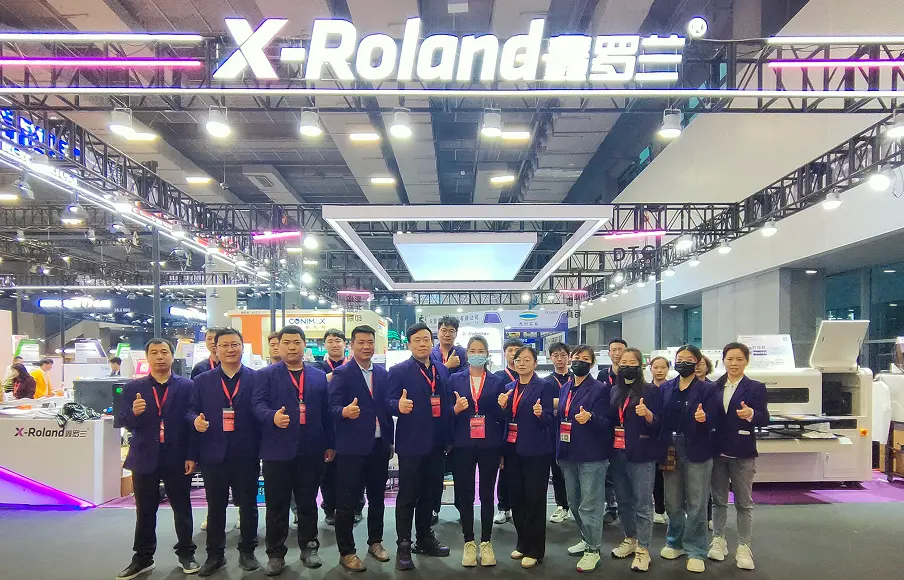
From the available information, the booth carried X-Roland branding and presented a large-format, floor-standing industrial machine. The exact function is not confirmed, so it would be reckless to pretend it was definitely a printer, cutter, engraver, or CNC system. Still, the visible form factor tells you something useful: this was not a tabletop demo unit. It was a serious piece of industrial equipment, built to attract attention from buyers who care about footprint, structure, and integration rather than just glossy panels.
That distinction matters. Trade-show equipment is often judged too quickly. A well-lit booth can hide weak mechanical design, but it can also introduce teams to a platform they would otherwise miss. The practical question is not “Did the booth look busy?” It is “Does the machine architecture fit a production environment, and what would it take to deploy it responsibly?”
What can be read from the booth display
The image shows a professional exhibition setup with clear X-Roland signage and a large white machine occupying the right side of the stand. The machine appears to be metal-framed, floor-standing, and arranged around a flat working area or bed. It also has an enclosed upper section and side access or control panels. Those are the kinds of design choices buyers notice when they are comparing industrial systems for real use.
A few practical observations stand out:
The machine is large-format, which usually suggests a need for stable support, clearance around the unit, and proper handling during installation.
The enclosure suggests attention to operator safety, dust control, or process containment, though the exact reason is not visible.
The booth itself is built around demonstration. That means the seller likely wanted visitors to focus on machine presence, build quality, and ease of viewing, not just on brochures.
One caution here: visible scale can be misleading. A machine may look production-ready on a show floor and still require a fair amount of downstream work before it fits a plant’s actual workflow. Buyers should always ask what peripheral systems are needed, whether the machine requires special utilities, and how material handling is supposed to work in practice.
How buyers should interpret a trade-show machine
When a supplier brings industrial machinery to an exhibition, the display usually serves three audiences at once: technical buyers, commercial buyers, and distributors. Each group reads the machine differently.
For engineers
The first questions are structural and functional. How rigid is the frame? Is the working surface practical for the intended materials? Does the enclosed design support the process or simply make the machine look more complete? Without published specifications, you cannot answer these questions fully from a photograph, but you can decide whether the form factor is worth a deeper discussion.
For sourcing managers
The issue is risk. A machine that looks strong on the stand may still create integration problems if service support, consumables, software compatibility, or operator training are not mature. At a show, the key is not to get seduced by the display. It is to leave with enough evidence to compare suppliers properly.
For product teams
The relevant question is whether the equipment can support your product roadmap. If the machine is meant for fabrication, cutting, printing, engraving, or some other automated process, does it align with your materials and volumes? If the answer is uncertain, the right move is to request samples, workflow details, and references for similar production environments.
What this kind of equipment usually signals
Even with limited information, a booth like this often signals a few broad product themes in industrial manufacturing.
First, it suggests a focus on integrated machine design. Large enclosed systems tend to be easier to present as complete solutions, especially when a supplier wants to communicate professionalism and process discipline.
Second, it points toward shop-floor usability. A floor-standing machine with a substantial frame is generally aimed at production use rather than occasional bench work.
Third, it often indicates a market positioned around fabrication or automated processing. The visible setup could fit several categories, including CNC operations, printing, cutting, engraving, or related industrial workflows. That uncertainty is not a flaw in the article; it is the reality of reading from a trade-show image. The buyer lesson is simple: never assume process type from looks alone.
What to ask a supplier after seeing a booth like this
The smartest visitors leave a show with fewer assumptions and better questions. If you were evaluating a machine such as the one shown under X-Roland branding, these are the questions that would matter most:
What is the exact machine type and intended process?
Which materials is it designed to handle?
How is the work area configured, and what size parts can it support?
What utilities does it need on site?
How is maintenance handled, and what components are considered wear parts?
What software or control system comes with it?
What operator training is required before production use?
What kind of after-sales support is available in your region?
Those questions are basic, but they separate a serious sourcing review from a casual show visit. A polished booth can start a conversation; it should not close the buying process.
Common mistakes buyers make at exhibitions
The biggest mistake is to equate visual quality with performance. A machine can have excellent fit and finish and still be unsuitable for your application. The second mistake is to ask only about price. On equipment of this scale, total cost is shaped by installation, consumables, downtime risk, operator training, and service availability. The third is to ignore process fit because the machine “looks close enough.” In manufacturing, close enough can become expensive very quickly.
Another practical warning: trade-show demos are staged. That does not mean they are fake, but it does mean the environment is controlled. Lighting, media, materials, and timing are all optimized. A buyer should treat the booth as a first filter, not a technical proof.
When a show like DPES is worth a site visit
Events such as DPES Guangzhou are useful when you are in the early or middle stage of sourcing. If you are still comparing machine categories, a show can help you narrow the field fast. If you already know your process requirements, the show becomes a screening tool for build quality, supplier maturity, and service posture.
That is likely why the X-Roland booth would have drawn interest: a large industrial machine in a live exhibition environment gives visitors something concrete to inspect. Even without exact model data, the machine’s scale and enclosure suggest a supplier trying to communicate capability, not just concept art.
FAQ for buyers
Is the exact machine type confirmed from the image?
No. The visible equipment appears to be industrial machinery, but the specific process is not readable from the image and should not be guessed as fact.
Can a buyer make a decision from a trade-show display alone?
Not responsibly. The booth is a starting point. Final decisions should rely on specifications, sample output, service terms, and application testing.
Why does branding matter if the machine details are unclear?
Branding helps buyers identify the supplier and begin due diligence. It does not replace technical verification, but it does tell you where to direct follow-up questions.
What is the best next step after seeing equipment like this?
Request the machine’s exact model details, process description, material compatibility, and support package, then compare that information against your production needs.
A practical next step for sourcing teams
If Jihui Electronics' Successful Concludes at the DPES Guangzhou International ... is on your radar because you are evaluating industrial machinery, treat the exhibition as a lead, not a conclusion. Ask for the technical sheet, confirm the machine category, and compare the visible design against your own floor space, utility access, and workflow requirements. If the supplier can explain the equipment clearly, support it locally, and show that the machine fits a genuine production use case, then the booth becomes more than a display. It becomes the beginning of a serious sourcing conversation.