Crystal UV Transfer Stickers: One Stick, Infinite Possibilities
If you are comparing crystal UV transfer stickers for a product line, a retail display, or a branded accessory, the real question is not just how they look in a photo. It is whether the sticker can survive handling, keep its edge definition, and carry a premium appearance without turning into a production headache. That is where Crystal UV Transfer Stickers: One Stick, Infinite Possibilities becomes more than a catchy phrase. For sourcing teams and product developers, it signals a decoration method that can do a lot of visual work with a relatively simple application step.
The appeal is easy to understand. These stickers are meant to deliver a clear, glossy, dimensional look while sticking cleanly to a surface. In practice, that makes them useful for branding, packaging accents, promotional items, equipment labeling, and showroom presentation pieces. But the buyer still has to make a decision that affects cost, workflow, durability, and how the finished item is perceived by customers.
What buyers usually mean by “crystal UV transfer stickers”
The term is often used in a practical, not strictly technical, way. In many purchasing conversations, it refers to a transfer-style decorative sticker with a crystal-like visual effect and a UV-cured finish. That finish is usually associated with gloss, clarity, and a raised or polished appearance. The exact construction can vary by supplier, so it is worth asking what layer does what: the printable surface, adhesive layer, protective coating, and any transfer film or carrier.
That caution matters. A sample that looks excellent under showroom lighting may behave differently on curved packaging, coated metal, varnished paperboard, or textured plastic. A sticker that transfers cleanly on a rigid, smooth surface may not suit a softer or heavily contoured substrate. Buyers sometimes discover this only after the first production run, which is an expensive way to learn a basic compatibility lesson.
Why the finish matters as much as the artwork
In decoration work, the artwork gets the attention, but the finish often decides whether the item feels premium or ordinary. A crystal effect can lift a simple logo, especially on a dark background or a clean flat surface. The gloss can make colors appear sharper, and the dimensional feel can make a small mark seem more deliberate and more valuable.
That is useful in industries where the visual cue carries part of the selling message. Think of retail gift packaging, boutique electronics, high-end promotional items, event merchandise, or award-style displays. Even a corporate recognition piece, such as a framed partner certificate or dealership plaque, benefits from a finish that looks intentional rather than generic. In a reception area or showroom, surface quality influences credibility more than many teams admit.
Where crystal UV transfer stickers fit in manufacturing and branding
These stickers sit in an interesting middle ground between print decoration and applied branding. They are not usually treated like structural components, but they are part of the product experience. That makes them relevant to both manufacturing and marketing teams.
Common use cases include:
- product logos and badges on packaging or accessories
- decorative branding on retail display items
- premium labels for promotional goods
- identification or recognition plaques used in offices and showrooms
- short-run customization where a full print setup would be too much
Because they can be applied to relatively small runs without building a complex decoration line, they are attractive to teams that need flexibility. Still, “flexibility” should not be confused with universal compatibility. The sticker and the target surface need to be matched carefully, especially when the part will be handled often or exposed to light and cleaning.
Selection criteria that actually matter
A lot of sticker sourcing decisions get lost in visual samples. That is understandable, but not enough. A useful buyer review should cover the points that affect production and field use.
Surface compatibility
Ask what substrates the sticker is intended for. Smooth plastic, coated board, painted metal, glass, and varnished surfaces are not the same. Adhesion behavior can shift a lot.
Visual clarity
Crystal-style decoration depends on sharp edges, clean transparency where needed, and consistent gloss. Cloudiness, misregistration, or uneven coating will stand out fast.
Application method
Some transfer stickers are designed for quick hand application, while others require more careful positioning. If your line workers or assembly partners will apply them, request a process description rather than assuming it is straightforward.
Durability expectations
Do not overpromise what the sticker can do. If the item will be touched often, packaged tightly, or cleaned with chemicals, the finish needs to be evaluated under those conditions, not just on a sample board.
Batch consistency
For branded goods, the biggest risk is not one bad sample. It is variation across batches. Color shift, thickness differences, and slight edge changes can make a matched set look uneven.
Common mistakes buyers make
The first mistake is treating a decorative sticker like a purely graphic item. It is also a materials decision. Adhesion, top-coat behavior, and surface prep all matter.
The second mistake is approving from a flat sample only. A sticker can look fine on a sample card and fail on a curved package lid or a slightly textured finish. If the final use surface is known, test on that surface.
The third mistake is forgetting the handling stage. A sticker intended for a display plaque has a very different duty cycle from one used on consumer packaging. One may never be touched again after installation; the other may be handled in shipping, retail, and unpacking.
A practical aside: if a supplier cannot clearly explain the application sequence, that is usually a warning sign. Good decoration products are not magic. They are process-dependent.
How this relates to recognition materials and partner branding
It may seem odd to discuss a decorative sticker alongside a framed partner certificate, but the connection is straightforward: both are about visible credibility. A certificate or award plaque in a reception area is not only a document; it is a physical signal of status, authorization, or partnership. The same is true for premium sticker decoration on a product or package. In both cases, the surface treatment is carrying part of the message.
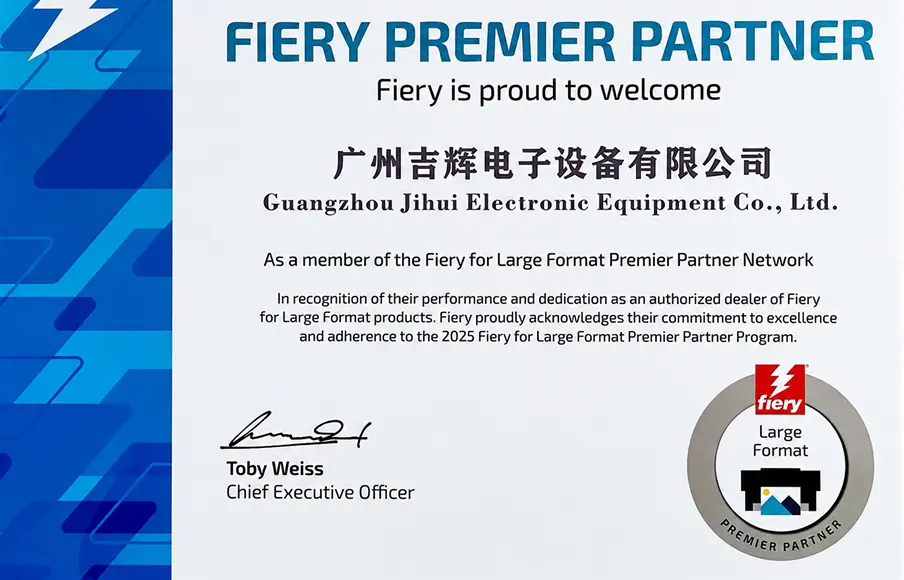
Consider the example of a printed corporate recognition certificate, such as a 2025 partner program document displayed for Guangzhou Jihui Electronic Equipment Co., Ltd. The value is not in the paper alone. It is in what the document says to visitors, sales prospects, and staff. Likewise, a well-made crystal UV transfer sticker says something about attention to detail, brand care, and finish quality. Different objects, similar business function.
Buyer advice for sourcing teams
When evaluating suppliers, ask for more than a picture and a quotation. Request the substrate recommendation, application notes, and a sample that matches the actual use case. If the sticker is meant for product branding, ask how it behaves under handling and whether the finish changes after application. If it is for display or recognition materials, ask how the visual effect reads under office lighting rather than studio light.
It also helps to define the business objective before you compare prices. Are you trying to improve shelf appeal, create a premium impression, reduce assembly time, or support a dealer-facing display? The answer affects which features matter most. A strong-looking sticker that is difficult to apply is not a good buy if the labor cost wipes out the aesthetic gain.
For internal procurement discussions, it can be useful to separate “nice-looking” from “production-ready.” Those are not the same thing, and teams that mix them often end up re-sourcing after the first trial.
FAQ
Are crystal UV transfer stickers suitable for all surfaces?
No. Surface energy, texture, curvature, and coating all affect results. Always test on the final material.
Do they work better for branding or decoration?
Both, depending on the design and placement. Their premium look makes them especially useful when the visual mark is part of the product’s perceived value.
Are they a good option for small runs?
Often yes, especially when a full printing or embossing setup would be excessive. But the application process still needs to be practical for the run size.
What should I ask a supplier first?
Ask about compatible substrates, application method, durability expectations, and batch consistency. Those four questions eliminate a lot of risk early.
What to do next
If you are evaluating Crystal UV Transfer Stickers: One Stick, Infinite Possibilities for a product launch, a promotional line, or a branded display piece, start with the end surface and the handling conditions. That will tell you more than the catalog image ever will. A good supplier should be able to discuss the print or transfer structure, the intended application, and the limitations without dressing it up.
For buyers, that is usually the difference between a decorative detail that quietly improves the product and one that becomes a production problem. The best finish is the one that still looks good after the item has been touched, moved, packed, and used the way real customers use it.