The growth of personalized apparel has changed what many garment-printing businesses need from their equipment. Direct-to-garment printing, commonly called DTG printing, provides a route for detailed artwork and small quantities without preparing a separate screen for every printed color.
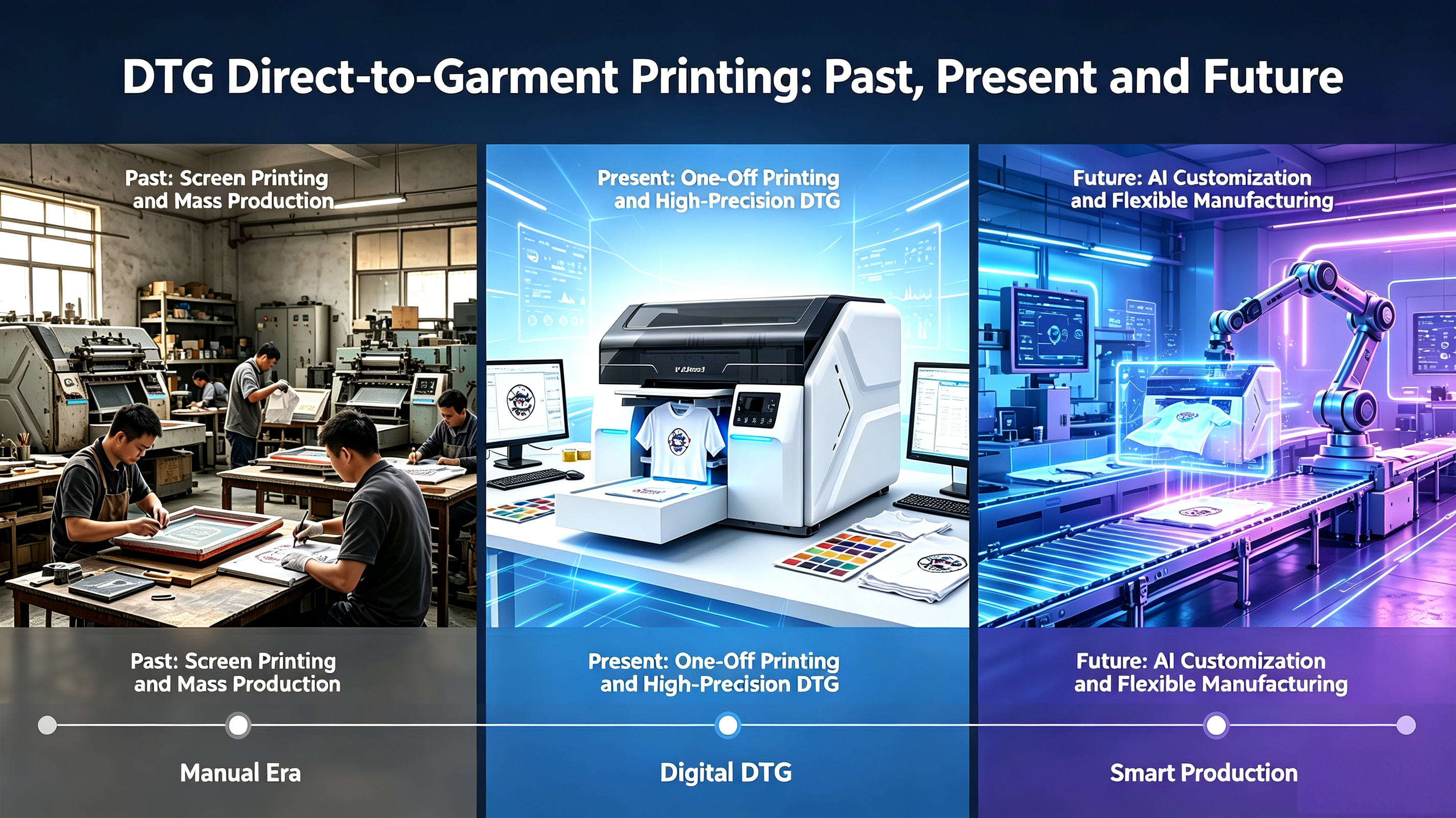
DTG development reflects the move toward flexible garment customization and more coordinated production.
The Past: Production Built Around Longer Runs
Screen printing has long been an important method for cotton garments. Preparing screens, setting up a job and managing changes can make very small quantities less convenient, even though the process remains useful for many longer-run applications. For a business serving one-off designs, setup time and the number of versions can have a significant effect on cost and delivery.
Print feel, breathability and appearance depend on the selected inks and process. The most useful comparison is therefore between complete production methods for the intended garment, not a claim that one technique is universally better.
The Present: Short Runs and Personalization
Streetwear brands, group apparel projects and creative T-shirt designs often require multiple artworks or small batches. DTG printing can support production starting with a single garment, making it relevant to businesses that need to change designs frequently.
The process can reproduce fine detail and a broad range of colors on suitable garments. The final result depends on the fabric, pretreatment, ink, print settings and curing. Checking these steps together helps establish a repeatable workflow rather than relying on the printer alone.
X-Roland's Garment-Printing Approach
X-Roland offers single-station and dual-station systems for personalized cotton garment printing. The wider workflow includes pretreatment and fiber-flattening processes, together with heat-press and oven options for the appropriate finishing stages.
These stages are intended to support fabric smoothness, color appearance and wash performance. Customers should confirm the proposed combination through tests on their actual garments, including washing tests appropriate to the finished product.
The Future: Easier Operation and Better Coordination
We expect continued development in automation, operating simplicity and production efficiency. The opportunity for DTG lies in helping businesses handle personalized orders with a process that is flexible enough for small quantities and consistent enough for repeat work.
DTG and other garment-printing techniques will continue to serve different needs. Choosing the right method starts with the fabric, artwork, order quantity and required finish. Contact X-Roland to discuss these requirements and a suitable sample-production workflow.