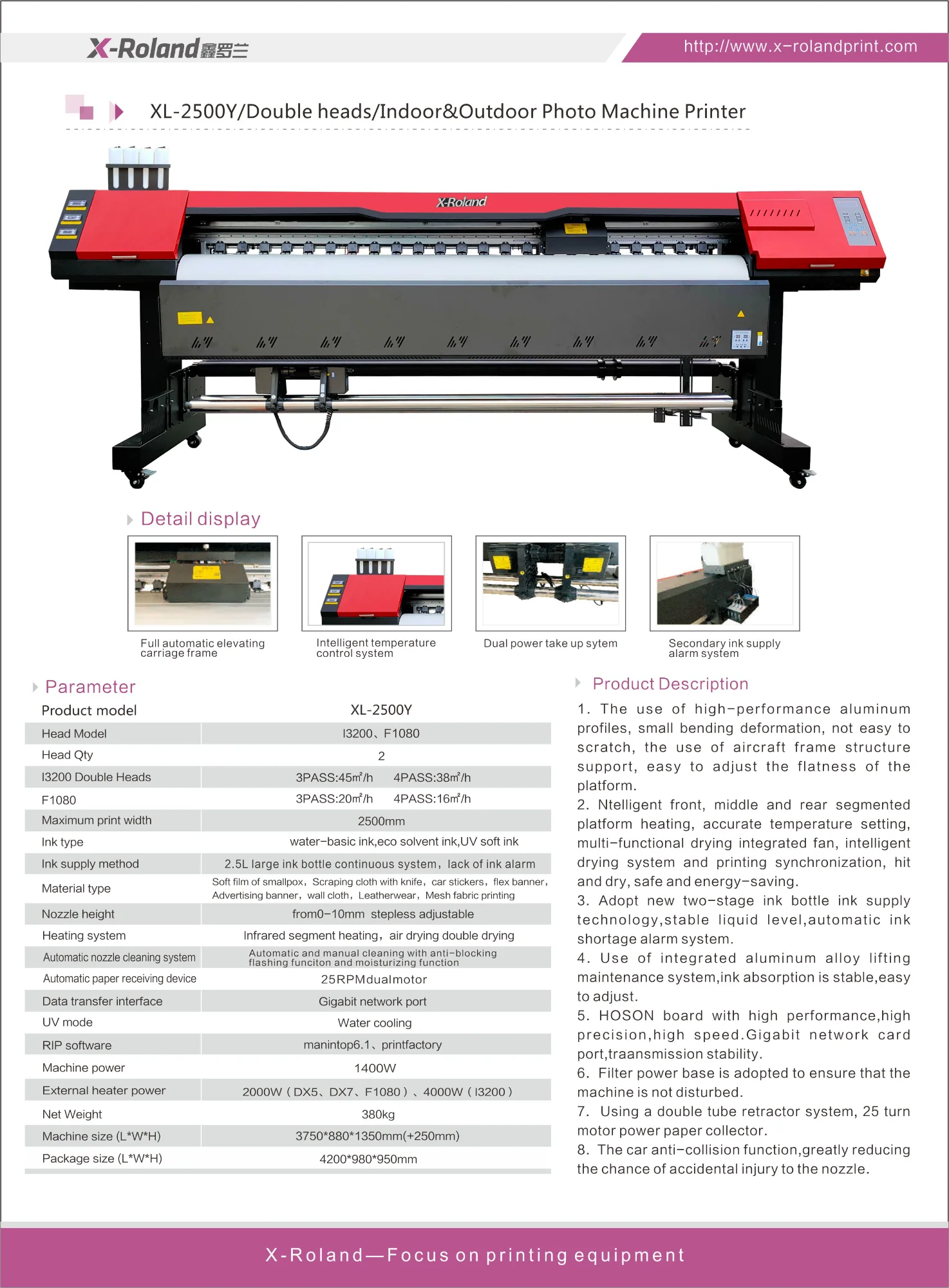
XL-2500Y/Double heads/Indoor&Outdoor Photo Machine Printer Overview
The XL-2500Y/Double heads/Indoor&Outdoor Photo Machine Printer is a wide-format roll-to-roll printer designed to help print shops produce large graphics without stitching multiple small prints together. For buyers handling banners, storefront graphics, posters, wallpaper, or other oversized visuals, the main problem is usually simple: the job is too wide for office printers and too demanding for ad hoc outsourcing. This floor-standing machine is built to support continuous media feeding, wide output, and industrial print workflows for indoor and outdoor graphic production.
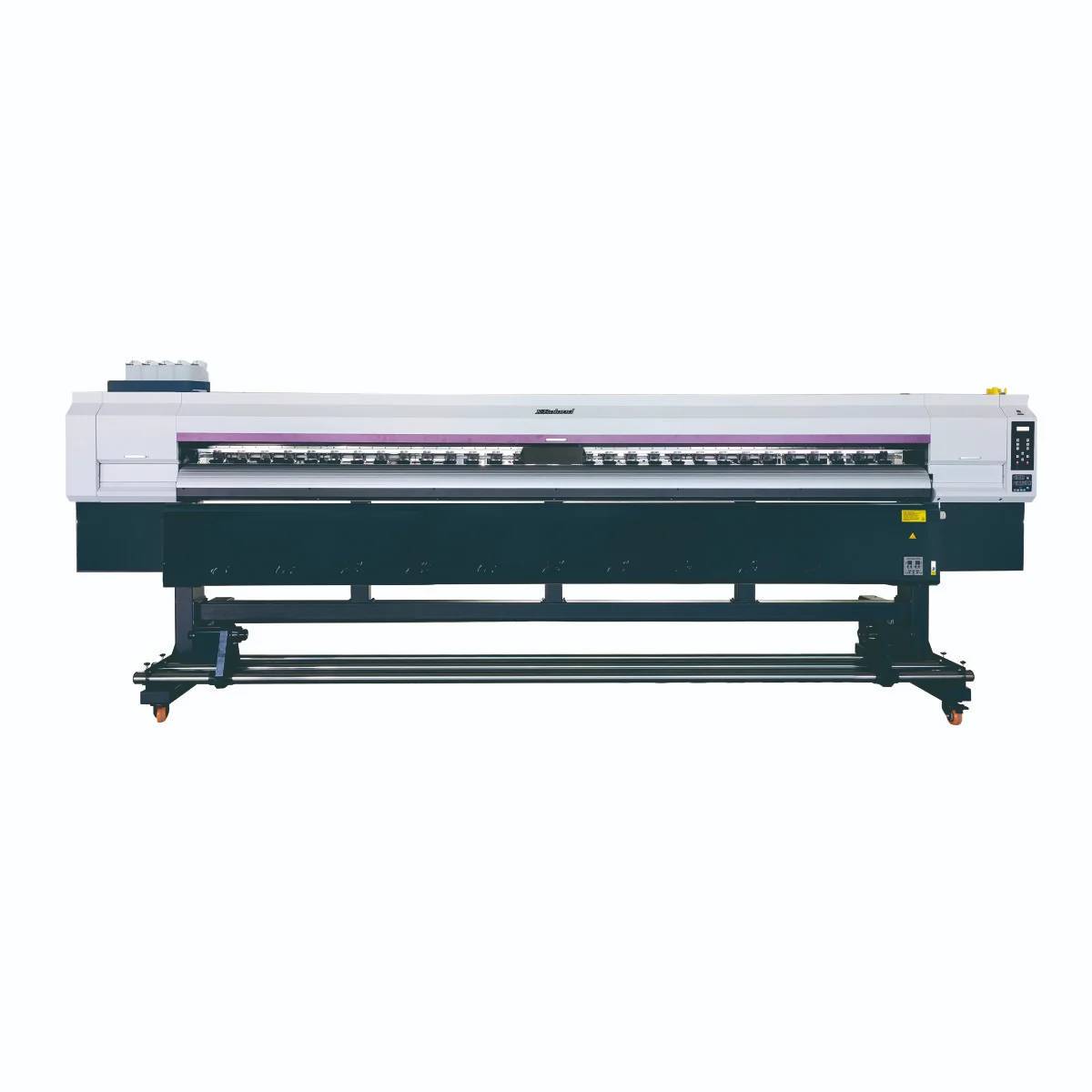
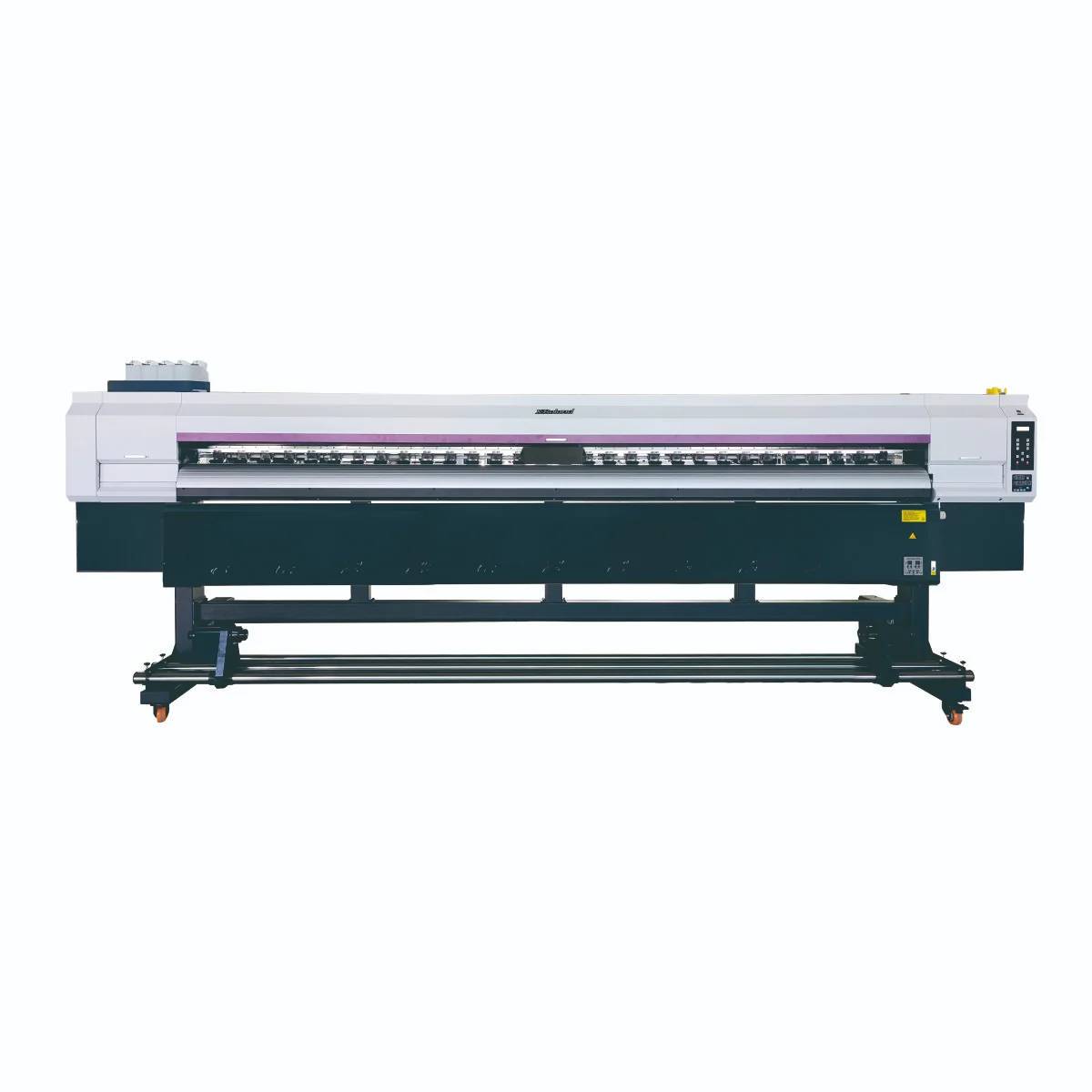
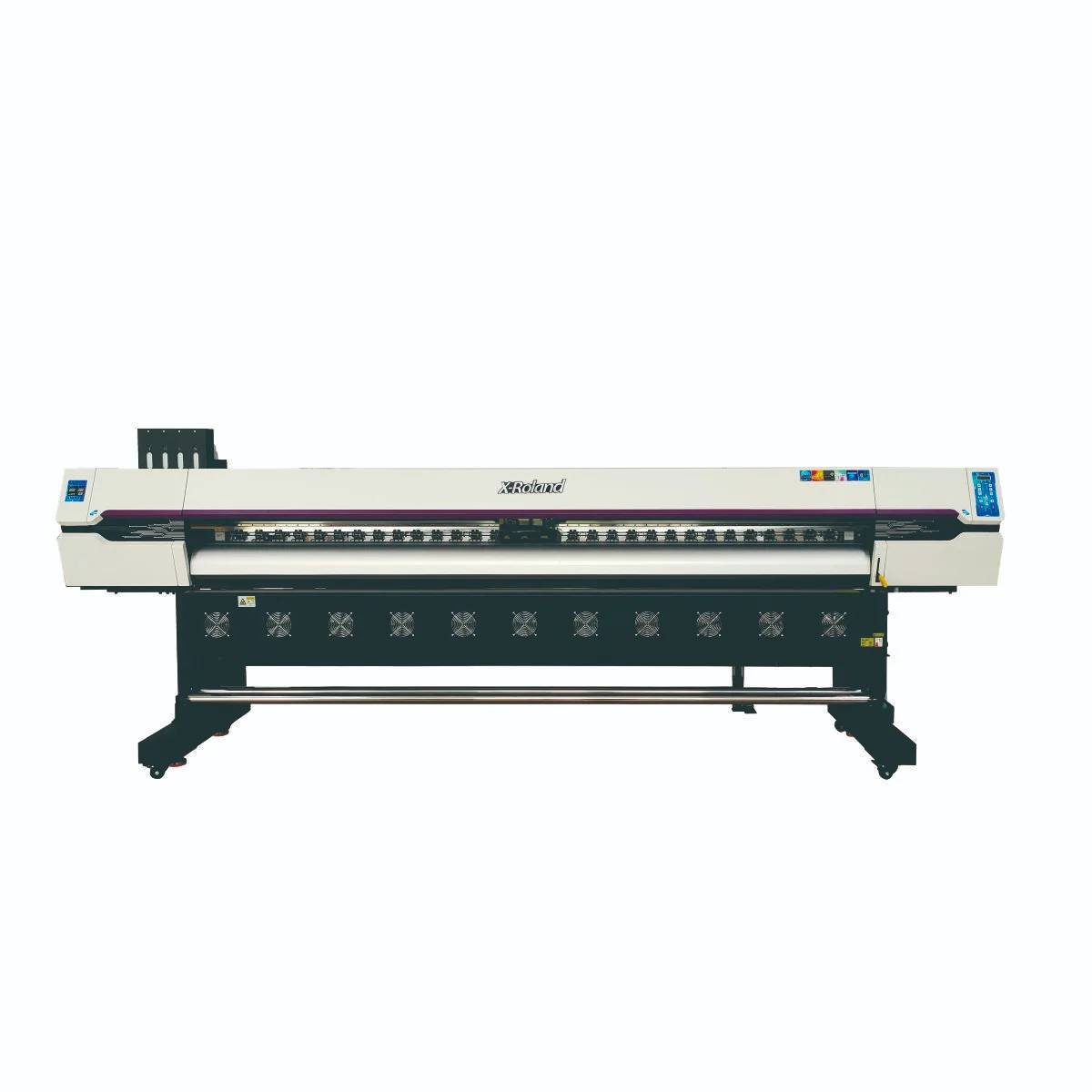
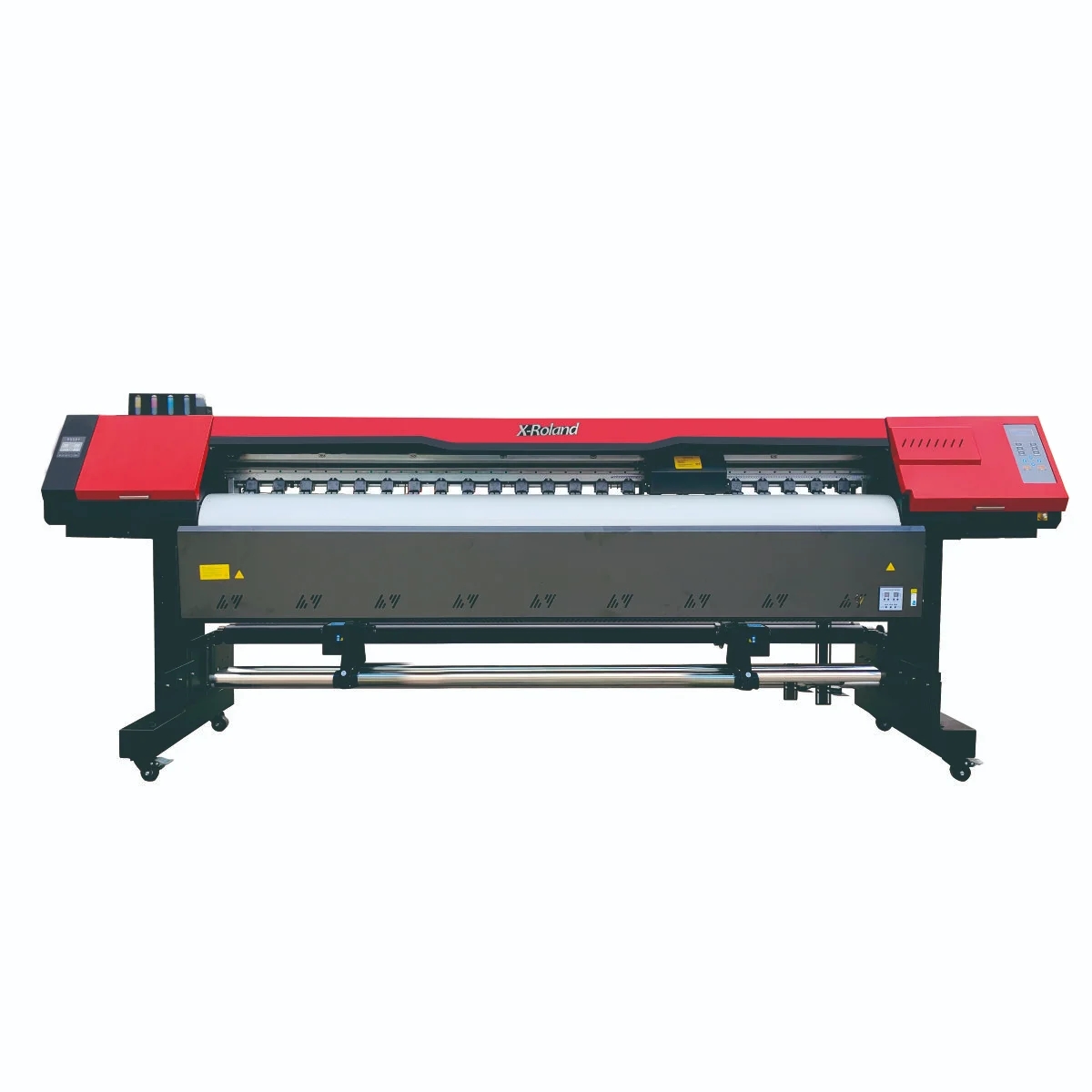
From the visible structure, this unit appears to be a long horizontal printing system with a heavy-duty metal stand, caster wheels, a roll-fed media path, a front guide area, and a right-side control interface. The layout is consistent with a professional large-format inkjet printer or plotter used in commercial production environments. Because the exact print engine, ink chemistry, and performance figures are not provided, it is best understood as a practical wide-format output platform rather than a machine with claimed specifications beyond what can be seen.
Product Overview
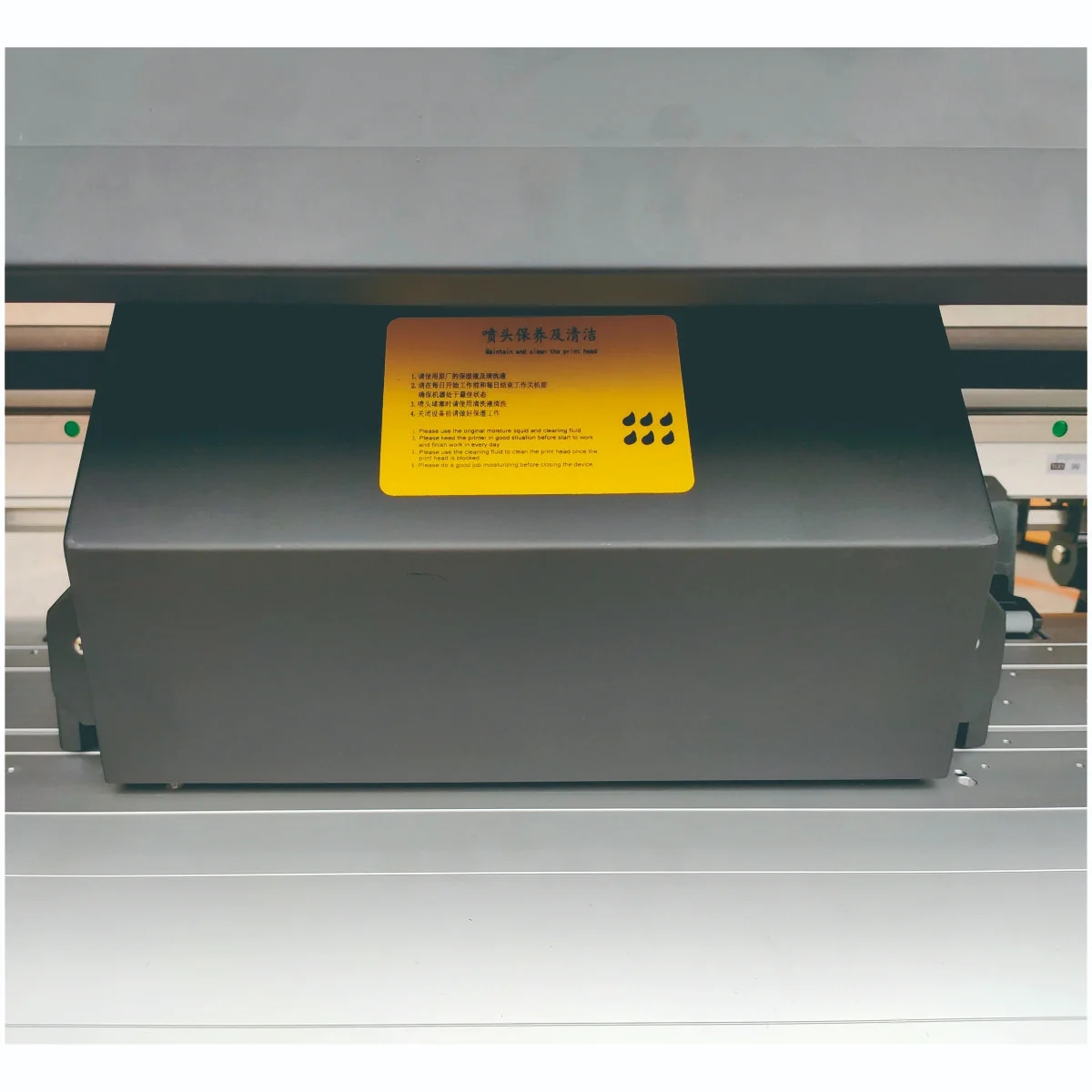
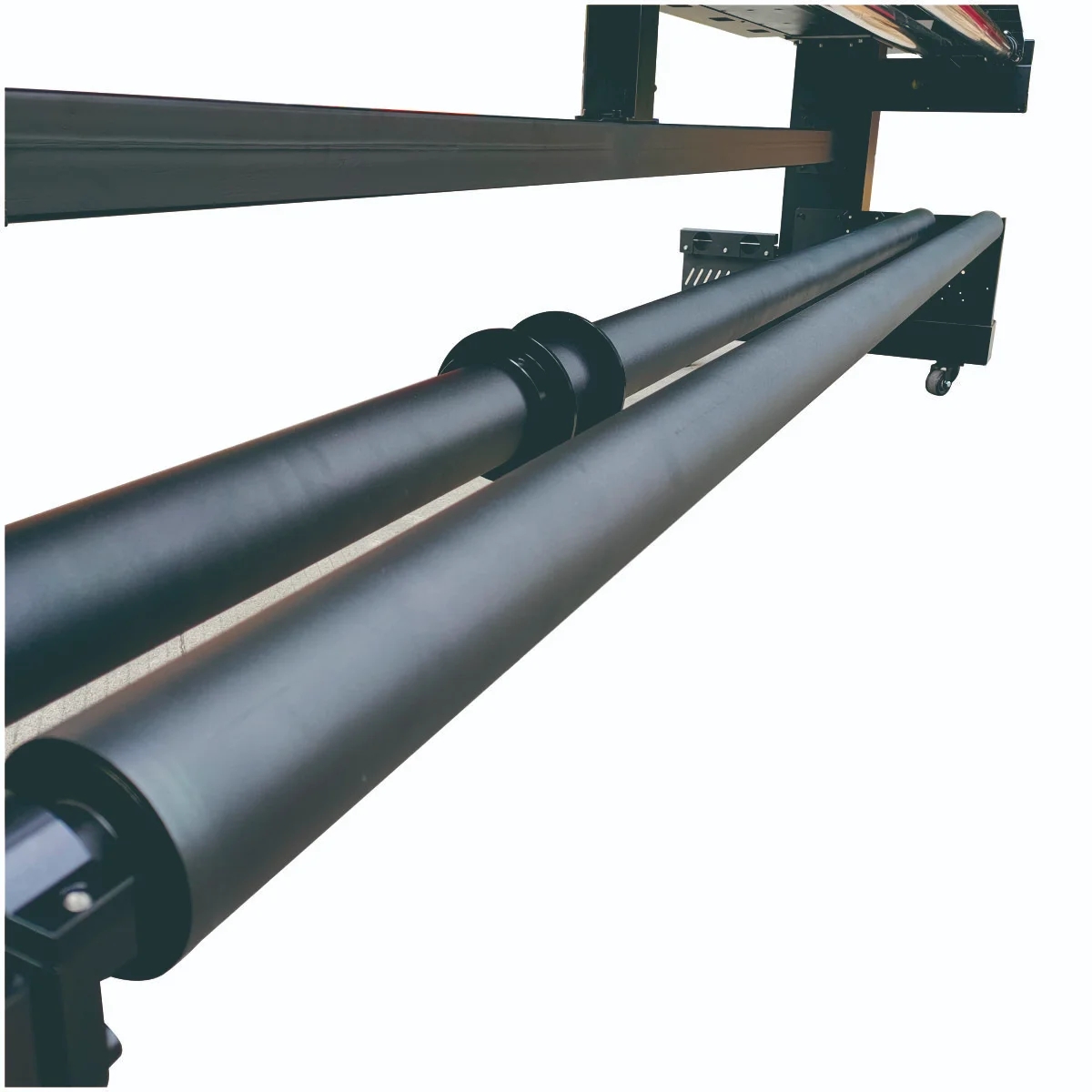
This printer is intended for large graphics work where sheet-fed office printers are not suitable. Roll-to-roll feeding allows long production runs and makes it easier to print on flexible media. The visible carriage rail and multi-roller feed path indicate a machine designed for controlled movement of the print head assembly and stable media tracking. In a busy print room, those two factors matter because alignment, feed consistency, and usable width directly affect productivity and waste.
The machine body uses painted metal cabinet panels and an industrial frame. That type of construction is common in wide-format equipment because it supports heavier media rolls and repeated operation. The caster-mounted stand also suggests the printer can be positioned in a production area with some flexibility, which helps when operators need access to the front, sides, or service covers.
What This Printer Helps Buyers Solve
For signage companies and graphic producers, a wide-format printer must do more than print large images. It needs to manage roll loading, keep the substrate moving straight, and deliver repeatable output over long jobs. The XL-2500Y/Double heads/Indoor&Outdoor Photo Machine Printer addresses these needs by combining a broad media path with a floor-standing structure and integrated operator controls.
That makes it relevant for buyers who want to reduce dependence on external print vendors, shorten turnaround time, and keep more production in-house. It is also useful for companies that need to switch between short promotional runs and larger graphic orders without changing to a completely different machine class.
Key Specifications and Visible Capabilities
Wide-format roll-to-roll structure
The most obvious capability is the wide printing format. The machine is substantially larger than a desktop printer and is clearly meant for roll media. This supports long graphics, continuous panels, and jobs where length matters as much as width.
Double-head configuration
The product name indicates a double-head setup. While the exact print technology is not confirmed from the image, a dual-head arrangement generally points to higher production capability or a configuration intended to improve printing efficiency. Buyers should confirm the specific head type, ink set, and maintenance requirements before purchase.
Integrated operator panel
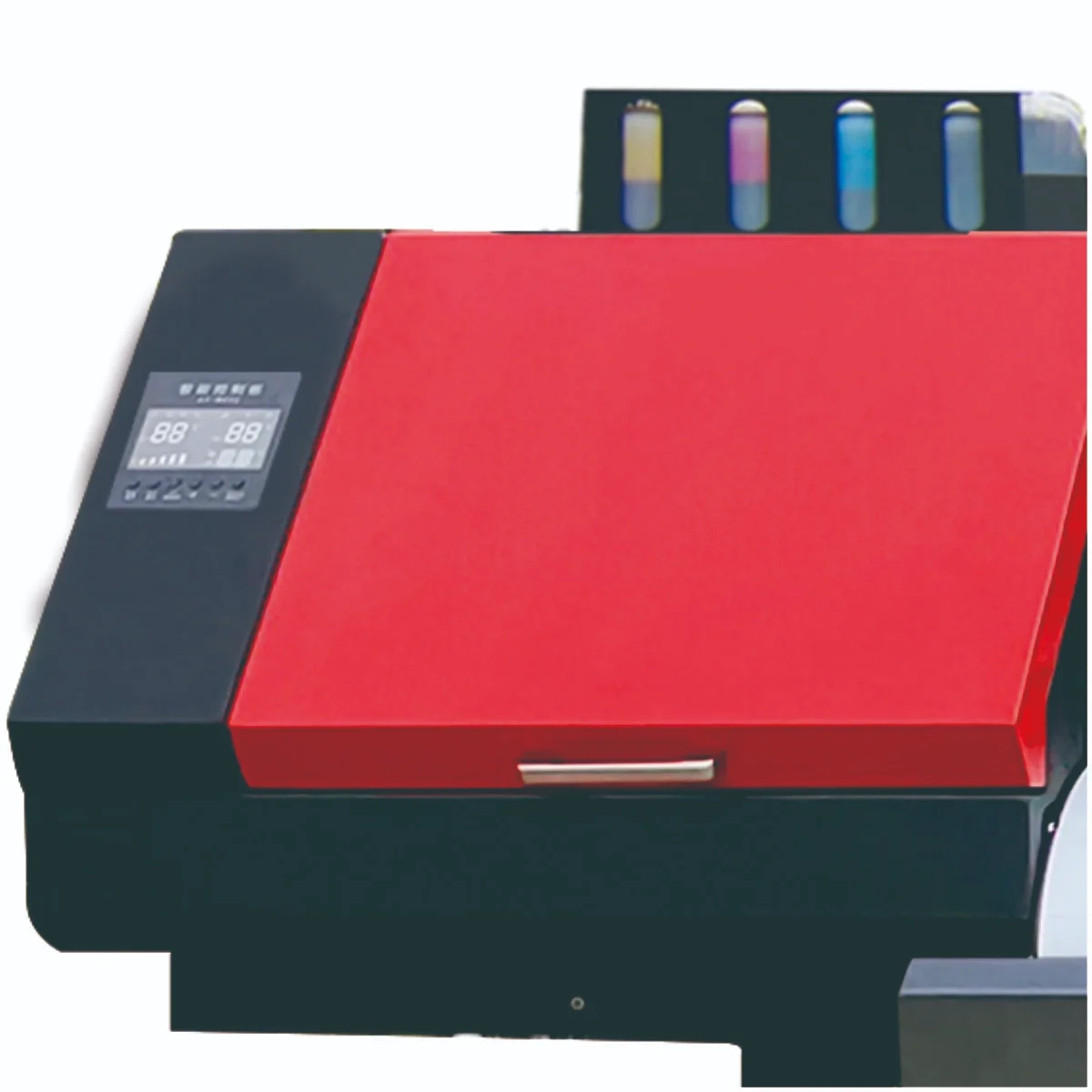
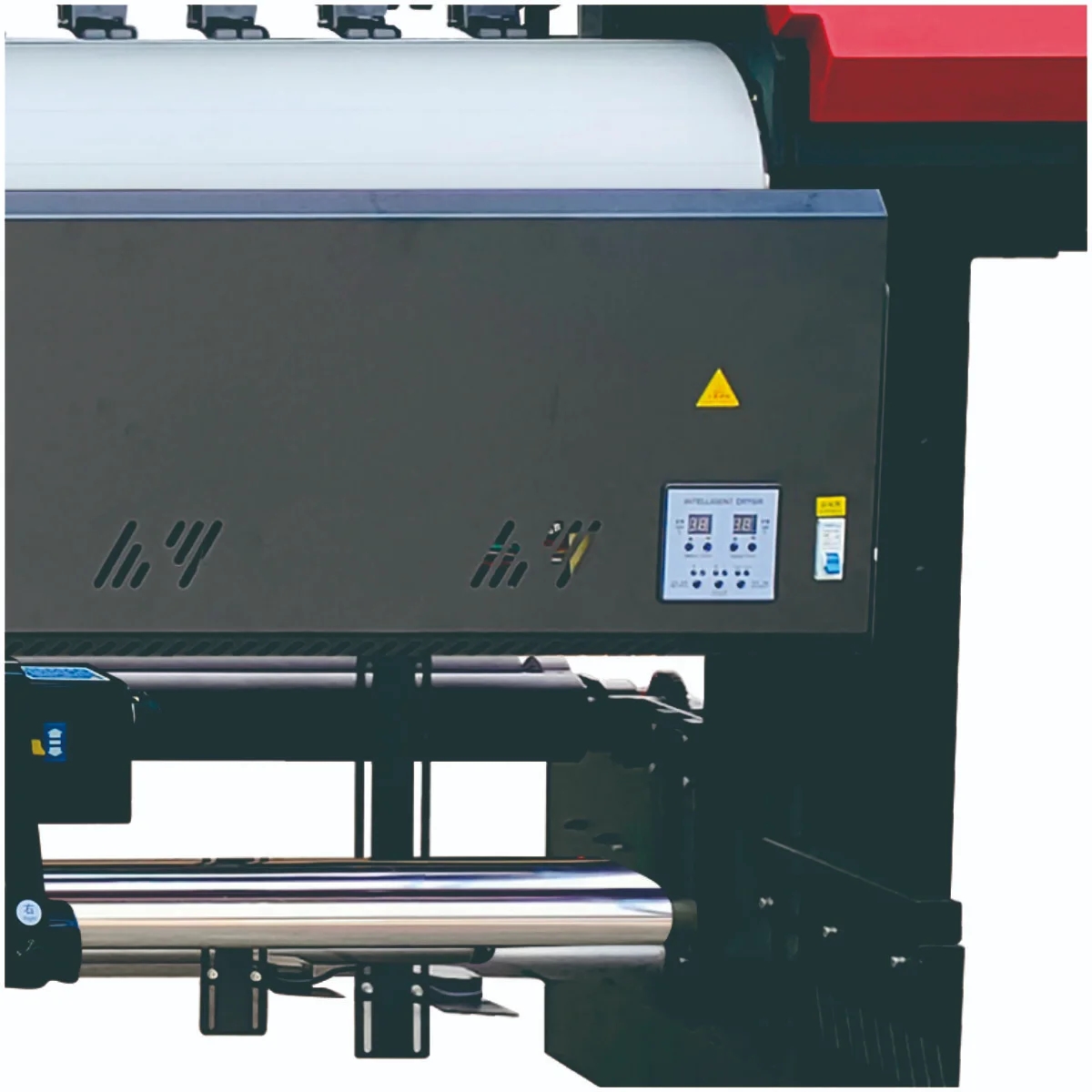
A control/display panel is visible on the right side. For operators, this matters because local machine controls are essential for loading media, checking status, adjusting settings, and handling routine operations without relying on external tools.
Heavy-duty support frame
The stand is built with industrial legs and caster wheels. This supports machine stability while still allowing repositioning inside the workshop. A stable base is especially important for long prints and large rolls, where vibration or poor leveling can affect output consistency.
Materials and Finish Options
The visible machine body appears to use painted metal panels in dark gray with red upper housings at both ends. That combination is typical of industrial equipment designed for workshop use. Painted metal helps protect internal components and gives the machine a durable exterior finish. The exposed rails, rollers, and carriage path suggest that serviceable mechanical parts are intentionally accessible for maintenance.
For the media itself, the printer is suitable for roll-fed flexible substrates commonly used in large-format graphics. The exact compatible materials are not provided, so buyers should confirm whether their intended media is supported. In this product category, common workflow materials often include banner stock, vinyl, poster media, wallpaper material, and other flexible print surfaces, but final compatibility depends on the machine configuration.
Manufacturing and Printing Process
This is a digital wide-format printing system, and the visible layout suggests an inkjet-based process. The media roll is loaded into the feed path, guided by rollers, and advanced through the print zone while the carriage moves across the rail. In practical terms, this setup is used to lay down large images line by line over a wide substrate.
Because the exact ink system is not confirmed, it would be inaccurate to describe the printer as solvent, eco-solvent, UV, or another specific type without supplier documentation. What can be said safely is that the machine is arranged for industrial roll printing, and that its design supports large-format graphics production with controlled media handling.
Typical Application Scenarios
This printer is a fit for commercial print shops that handle oversized advertising work. Common use cases include indoor and outdoor signage, promotional banners, exhibition backdrops, window graphics, wall graphics, and vehicle-related graphics. The roll-fed format is also suitable for poster production and long decorative runs where continuity matters.
For buyers producing graphics for retail, events, or brand displays, the main advantage is workflow efficiency. Once the media is loaded and the job is set, the machine can support continuous output on long rolls, which is more practical than repeatedly handling individual sheets.
Quality Control Considerations
When evaluating a large-format printer like this, quality control is not only about image appearance. It also includes media tracking, feed stability, carriage movement, and the accessibility of service parts. The visible guide rollers and rail assembly suggest the machine is built around controlled movement, which is a key factor in maintaining consistent output.
Buyers should ask for sample output, maintenance guidance, and a clear explanation of calibration procedures. Since exact resolution, speed, and drying performance are not supplied here, it is important to verify them directly with the seller. That approach avoids assumptions and helps match the machine to actual production requirements.
Customization and Buyer Guidance
For procurement teams, the best way to specify this machine is by workload rather than by marketing language. Start with the widest media size you expect to run, the average job length, and the material families you need to support. Then confirm the print head configuration, ink compatibility, control software, and service access layout.
If you are comparing multiple wide-format printers, pay close attention to the following decision factors: usable width, media loading method, maintenance accessibility, footprint, power requirements, and operator familiarity. The XL-2500Y/Double heads/Indoor&Outdoor Photo Machine Printer appears designed for professional production use, so installation space and workflow planning should be considered before delivery.
Customization may also involve frame color, control interface options, or workflow integration depending on the supplier. Since those details are not listed in the provided data, they should be confirmed in the quotation stage.
Why This Format Works for Production Buyers
Compared with smaller printers, a roll-to-roll machine like this reduces segmentation work and supports larger graphics in fewer pieces. That can simplify finishing, mounting, and installation. For shops that serve advertising clients, the ability to move from artwork to output on one machine can improve responsiveness and keep jobs moving through the shop floor.
The floor-standing industrial design also suggests better suitability for repeated use than lightweight office-style equipment. In a production environment, durability, access, and stable media handling usually matter more than cosmetic features.
Request a Quote or Confirm Specifications
If you are evaluating the XL-2500Y/Double heads/Indoor&Outdoor Photo Machine Printer for your production line, the next step is to confirm the exact print width, ink system, supported media, and service configuration with the supplier. Those details determine whether the machine fits your workflow and target applications.
Send your media size, job type, and production volume requirements to request a matching proposal. A clear specification check at the start will help you avoid compatibility issues and choose the right large-format printer for your shop.