XL-2200H Indoor/Outdoor UV Photo Machine Overview
The XL-2200H Indoor/Outdoor UV Photo Machine is a large-format roll-to-roll printer designed for businesses that need to produce wide graphics on flexible media without outsourcing every job. For sign shops, print service providers, and in-house production teams, the main problem it helps solve is straightforward: turning banners, posters, graphics, and other oversized artwork into finished output efficiently on a single production platform.
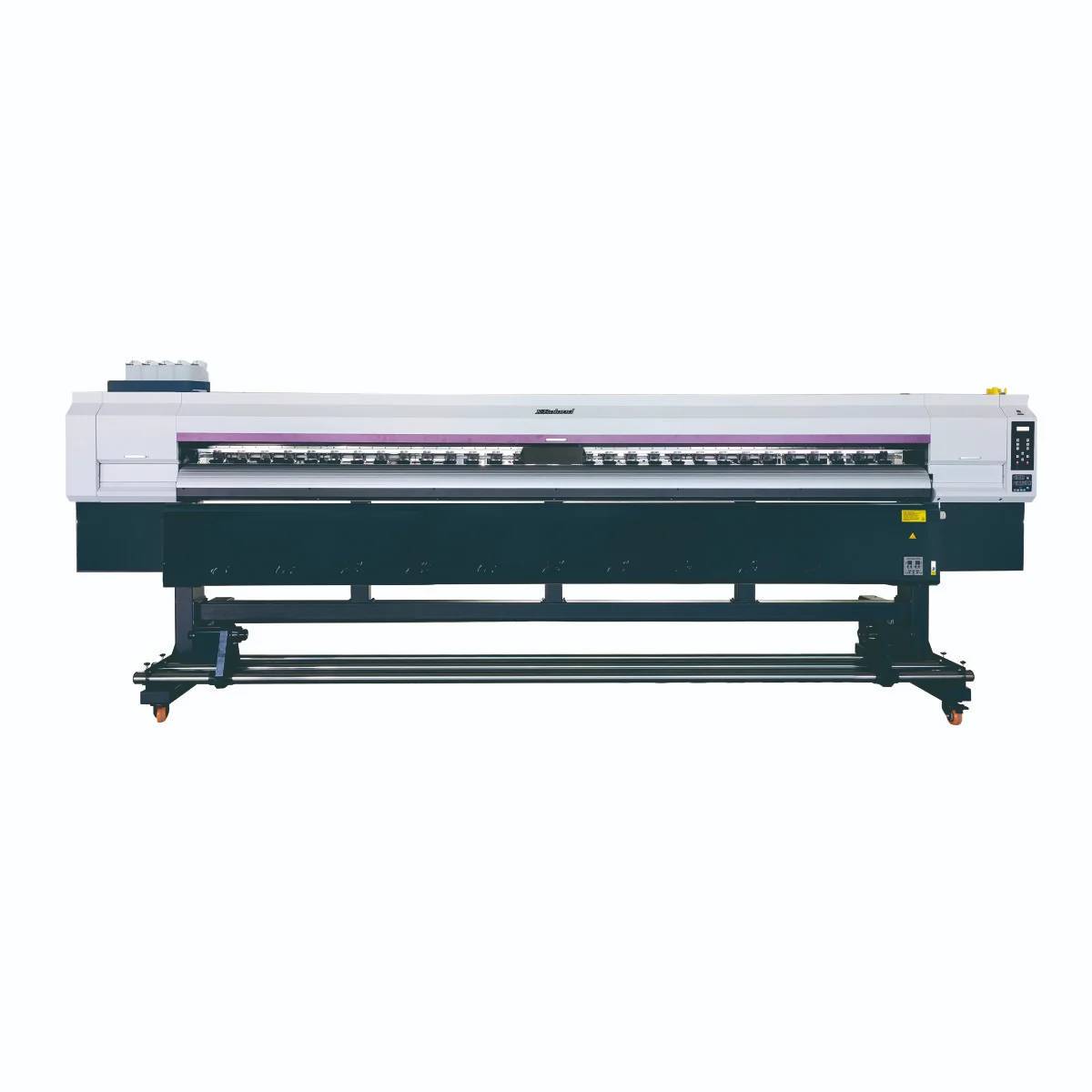
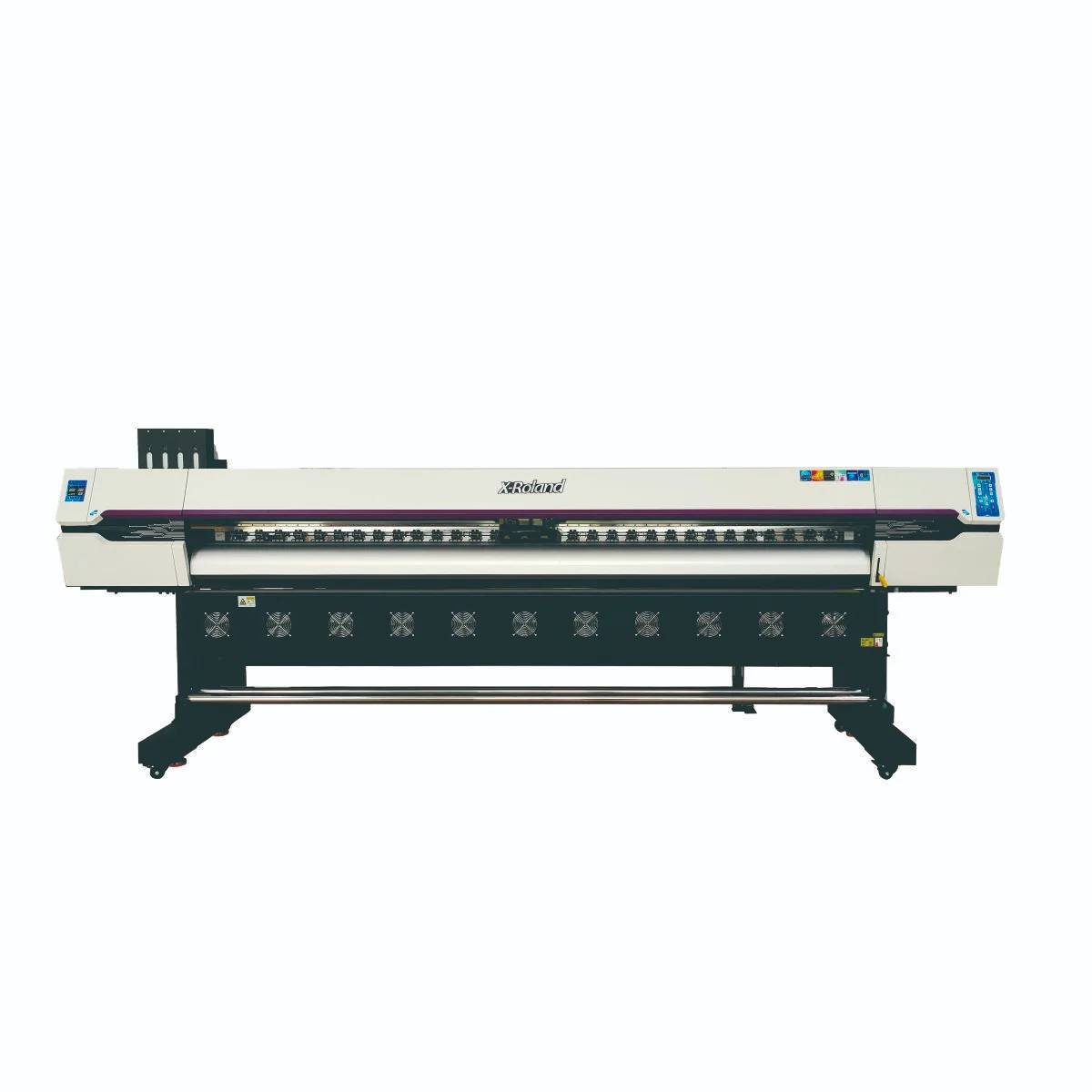
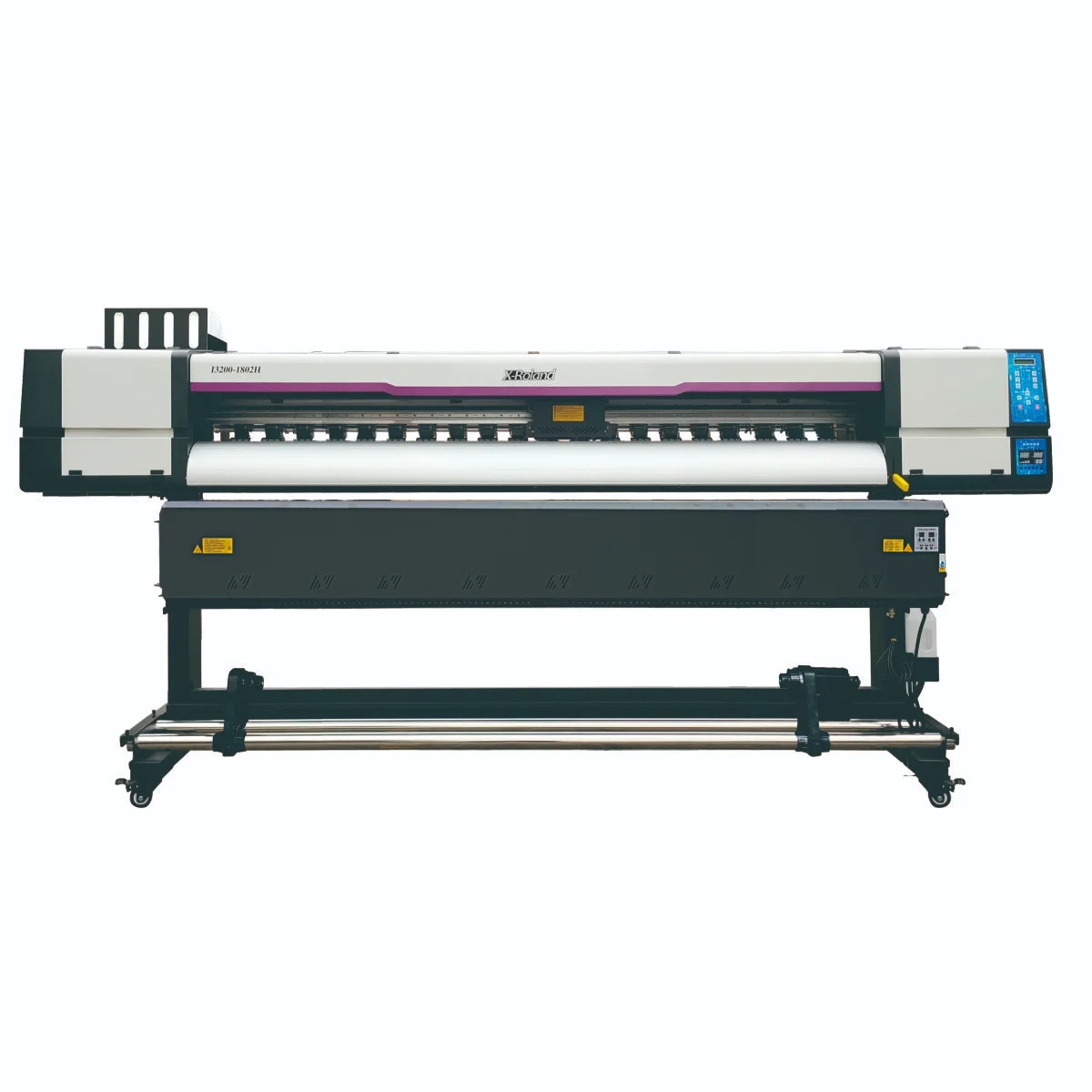
Based on the visible machine structure, this unit is built for roll-fed printing and continuous media handling. The floor-standing frame, integrated roller path, and front-access output area suggest a setup suited to commercial production environments where media length, workflow stability, and operator access matter. While the exact print technology, ink set, and output performance are not confirmed here, the machine clearly belongs in the wide-format digital printing category used for indoor and outdoor graphics.
What This Printer Is Designed to Do
This type of wide-format industrial printing machine is commonly used for jobs that are too large for standard office printers. Typical output includes banners, signage panels, posters, promotional graphics, point-of-sale displays, and vehicle wrap-related media. The roll-to-roll format is especially useful when the goal is to print long runs or oversized pieces on flexible substrate rather than rigid boards.
For buyers, that means fewer production bottlenecks. A shop can keep larger jobs in-house, reduce turnaround time, and maintain more control over consistency from file preparation through final output. The XL-2200H Indoor/Outdoor UV Photo Machine appears positioned for this kind of day-to-day production work.
Visible Machine Characteristics
From the provided product information, several features can be verified visually:
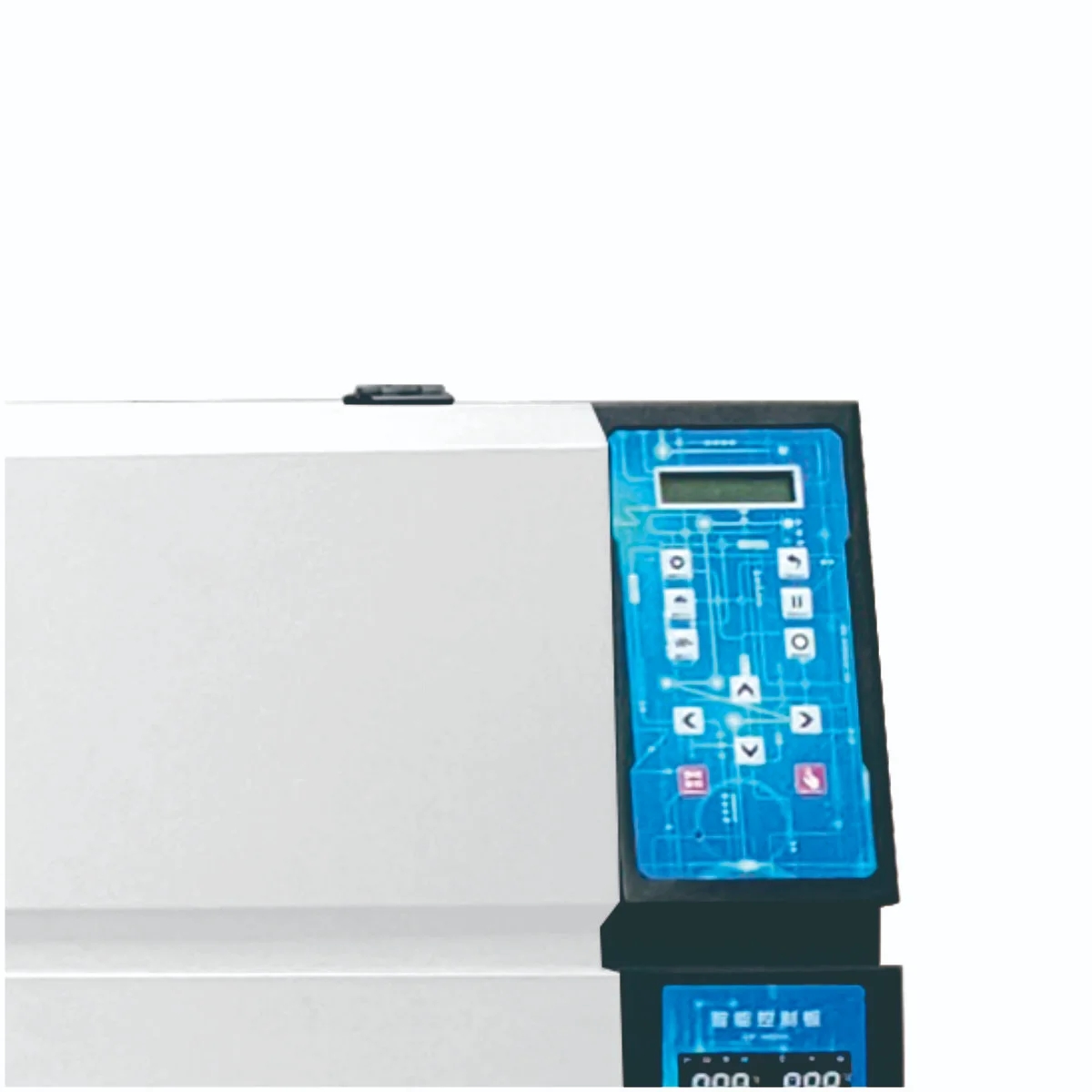
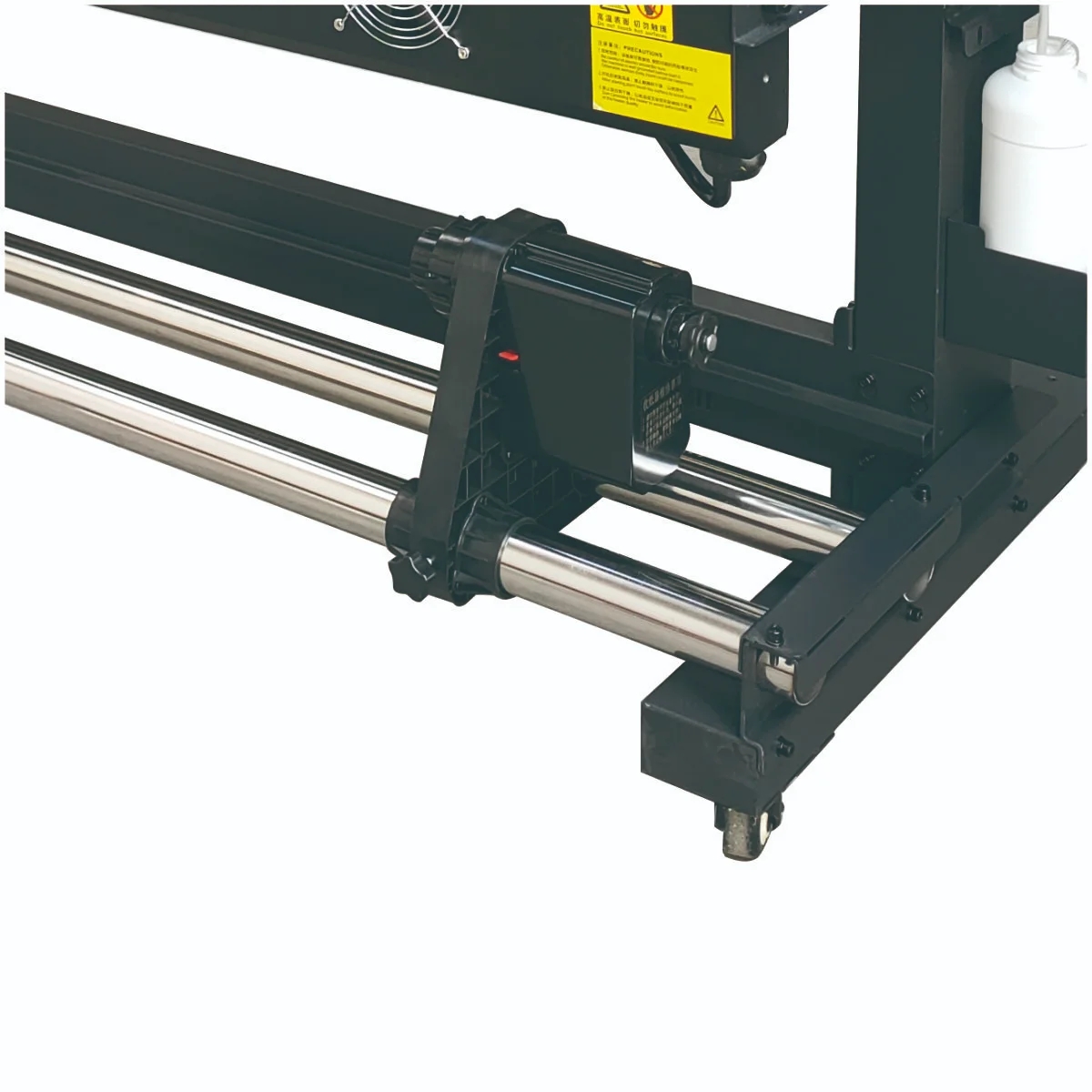
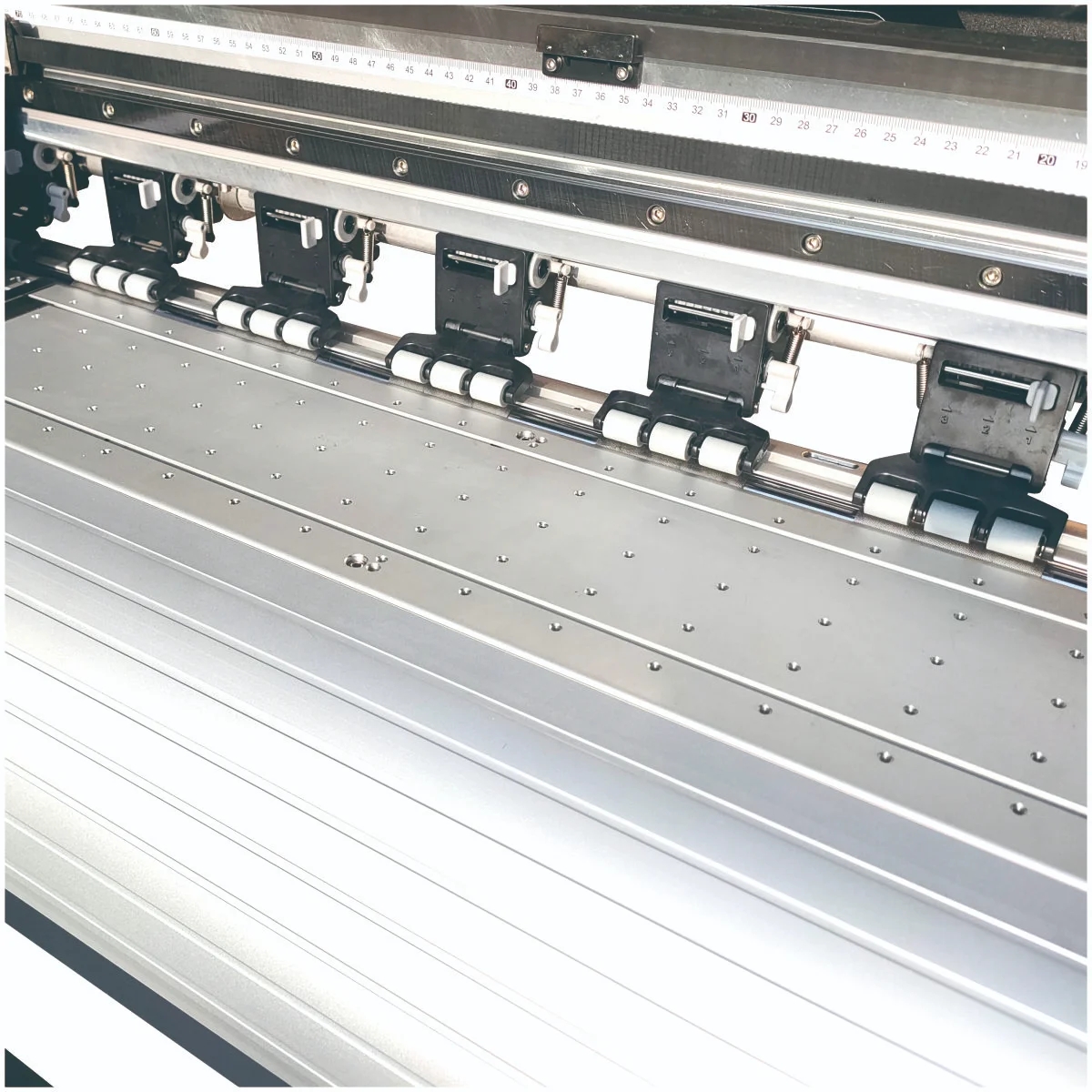
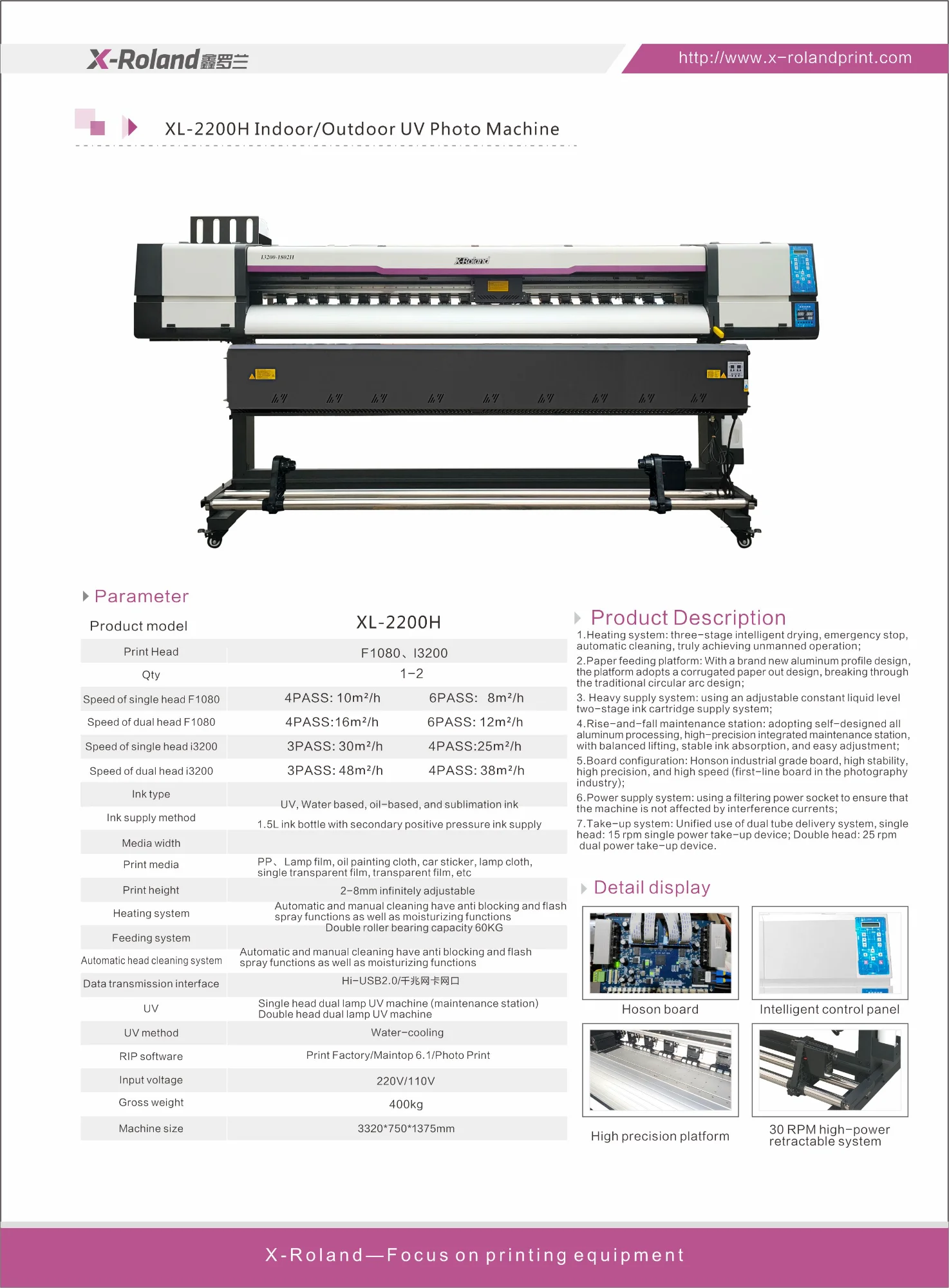
It has a long horizontal printer body mounted on a wheeled stand, which supports a stable floor setup while still allowing repositioning in the shop. The media path includes front take-up or guide rollers, indicating roll-fed handling and output management. The print carriage area is enclosed, and the right side includes a control panel/display for operation and status checks.
The housing appears to be built from painted metal panels in dark gray and light gray finishes, with metal roller shafts and a plastic/metal control enclosure. That construction is typical of industrial equipment that must withstand repeated loading, unloading, and daily use in a production setting.
Key Specifications and Capabilities to Evaluate
Because exact technical data has not been supplied, it is best to evaluate this printer by its production role and workflow capabilities rather than assuming numbers. For a buyer comparing wide-format printers, the most important decision points usually include media width, print speed, ink system, color configuration, and supported roll materials. Those details are not confirmed here and should be requested from the supplier before purchase.
That said, the machine’s visible layout tells you something useful about its capabilities. A roll-fed, large-format construction usually supports continuous output for long graphics, making it suitable for batch work and extended print runs. The front-access media handling also helps operators manage loading and alignment more efficiently, which is important when changing rolls often or running multiple short jobs in a production shift.
If your workflow depends on signage, banners, advertising graphics, or similar flexible media applications, this is the kind of system that can fit into a dedicated print room or small production line.
Materials and Finish Options
The machine itself uses a combination of painted metal cabinetry, structural frame components, and industrial control hardware. That kind of build is standard for a commercial printer because it provides rigidity and protects internal components from routine handling.
As for output materials, the exact media compatibility is not listed. In this class of printer, buyers commonly work with vinyl, banner material, paper, coated film, and other roll substrates used for indoor and outdoor graphics. The actual acceptable media range depends on the print system, ink formulation, drying or curing method, and feed path settings, so compatibility should be confirmed before production planning.
If finish quality matters, ask about the printer’s support for matte or gloss media, the behavior of the ink on coated surfaces, and whether the machine is intended for crisp text, photographic imaging, or broad-area signage graphics. Those factors determine whether the final output matches your customer requirements.
Manufacturing Process and Workflow
As a wide-format digital printing machine, the XL-2200H Indoor/Outdoor UV Photo Machine would typically be used in a workflow that starts with image preparation, color management, roll loading, print setup, and output monitoring. The exact print technology is not visible from the image alone, so it should not be assumed whether the system uses UV, solvent, eco-solvent, or another ink platform. What is clear is that it is built around digital roll printing.
In practical use, operators load the roll media onto the feed system, align it through the rollers, and set up the print job through the side control interface. The enclosed carriage area suggests a controlled print zone designed to keep the production path organized. Once printing begins, the take-up or guide roller arrangement helps maintain media handling for longer output lengths.
This type of process is valued in production shops because it reduces manual intervention. A stable roll system can support repeatable output and help teams manage multiple jobs with less downtime between runs.
Application Scenarios
Commercial print shops
Print service providers often need a machine that can handle diverse jobs across one platform. The XL-2200H Indoor/Outdoor UV Photo Machine suits shops producing promotional graphics, event signage, and large-format advertising pieces.
Sign-making and display production
For sign makers, the value lies in flexible roll output. Banners, retail graphics, temporary displays, and directional signage all benefit from large-format printing that can be produced on demand.
Vehicle graphics and wrap-related work
While the exact media and ink compatibility are not confirmed, roll-to-roll wide-format systems are commonly used in vehicle graphics workflows. Buyers in this segment should verify stretch behavior, color stability, and laminate compatibility before committing to production.
In-house corporate production
Larger organizations sometimes bring printing in-house to control timing and branding consistency. A machine like this can be useful for ongoing production of marketing graphics, trade show materials, and internal communication displays.
Quality Control Considerations
For any industrial wide-format printer, quality control is not just about the machine itself. It also depends on calibration, media handling, operator training, and routine maintenance. Buyers should ask how color consistency is maintained, how nozzle or printhead checks are handled, and what cleaning or service procedures are recommended.
Because exact print resolution and ink system details are not provided, it is especially important to review sample output before purchase if your work depends on fine text, gradient smoothness, or color-critical applications. Ask for test prints on the actual media you plan to use whenever possible.
Inspect the physical build as well. The visible metal frame and wheeled base suggest a machine intended for regular use, but buyers should still confirm alignment stability, roller condition, and control system responsiveness during acceptance testing.
Customization and Buying Guidance
Before placing an order, define your production priorities. Do you need speed, image detail, media flexibility, or straightforward daily operation? The right configuration depends on the jobs you print most often.
Useful questions for buyers include: What media widths are supported? What ink system is used? Is the machine optimized for indoor graphics, outdoor signage, or both? What maintenance schedule is required? Are spare parts and technical support available? Can the printer be integrated into your existing workflow for RIP software, finishing, and lamination?
If you are comparing options, match the printer to your actual job mix rather than to a generic specification list. A banner-focused shop may care most about roll handling and throughput, while a graphics studio may prioritize consistent color and clean edge detail. The XL-2200H Indoor/Outdoor UV Photo Machine should be evaluated with those needs in mind.
Why the Roll-to-Roll Format Matters
The roll-to-roll structure is one of the most practical aspects of this machine. It supports long, continuous output and reduces the interruptions that come with loading individual sheets. That can improve productivity in shops that run repeated graphics jobs or larger-format runs.
It also simplifies media storage and handling. Instead of moving rigid boards through the system, operators can work with flexible rolls that are easier to load, transport, and finish. For many commercial printing workflows, that is the difference between a machine that looks impressive and a machine that actually fits production demands.
Request More Details Before Purchase
If you are considering the XL-2200H Indoor/Outdoor UV Photo Machine for your operation, request the full technical sheet and confirm the items that matter most: print width, media compatibility, ink type, power requirements, maintenance needs, and output samples. Those details will determine whether the machine is a match for your daily production work.
For buyers building or expanding a wide-format printing line, this model presents a practical roll-to-roll platform with a commercial footprint and visible industrial handling features. If you would like, contact the supplier for the complete specification package, sample output information, and integration guidance for your shop layout.