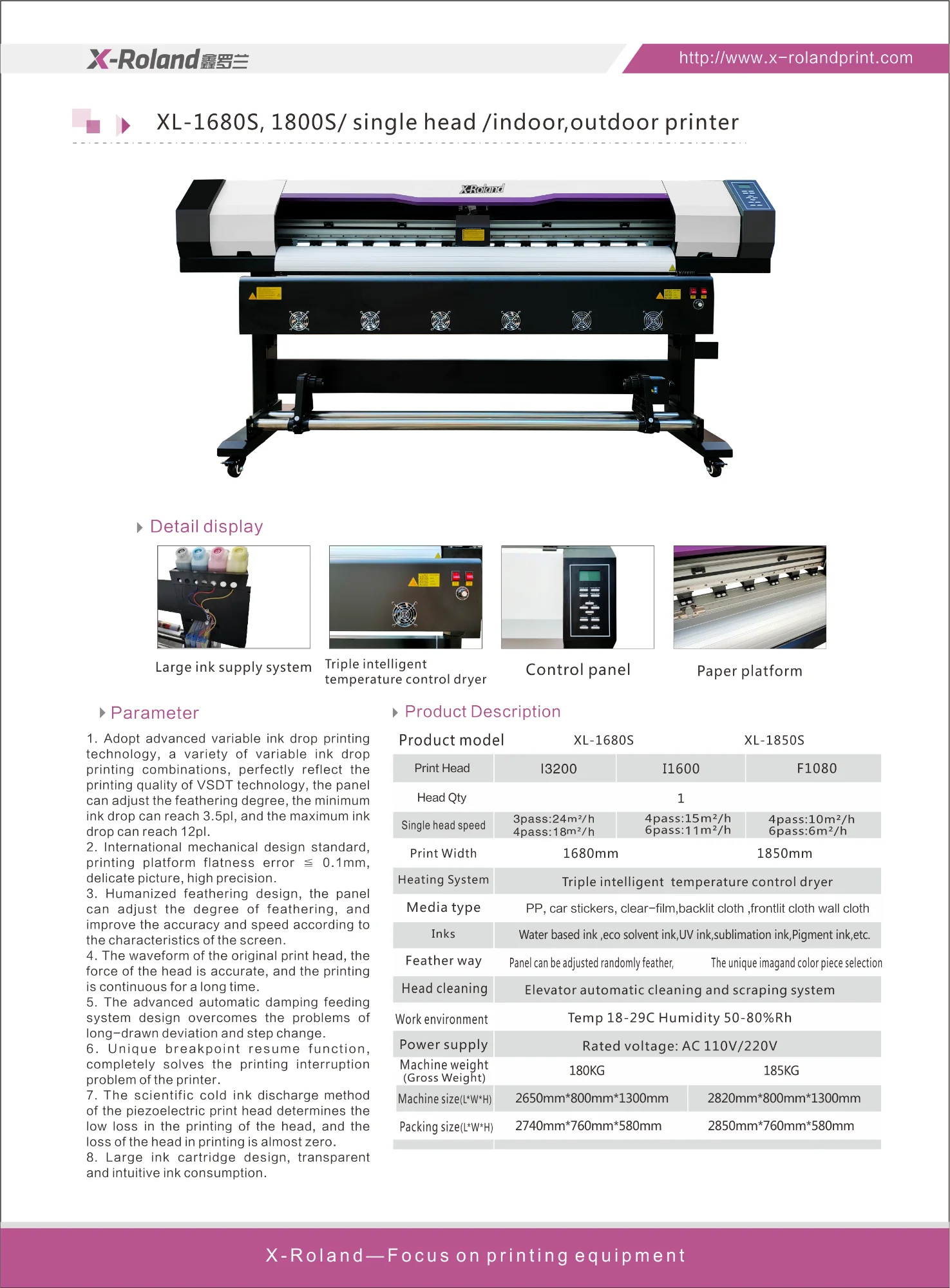
XL-1680S, 1800S/single head /indoor,outdoor printer Overview
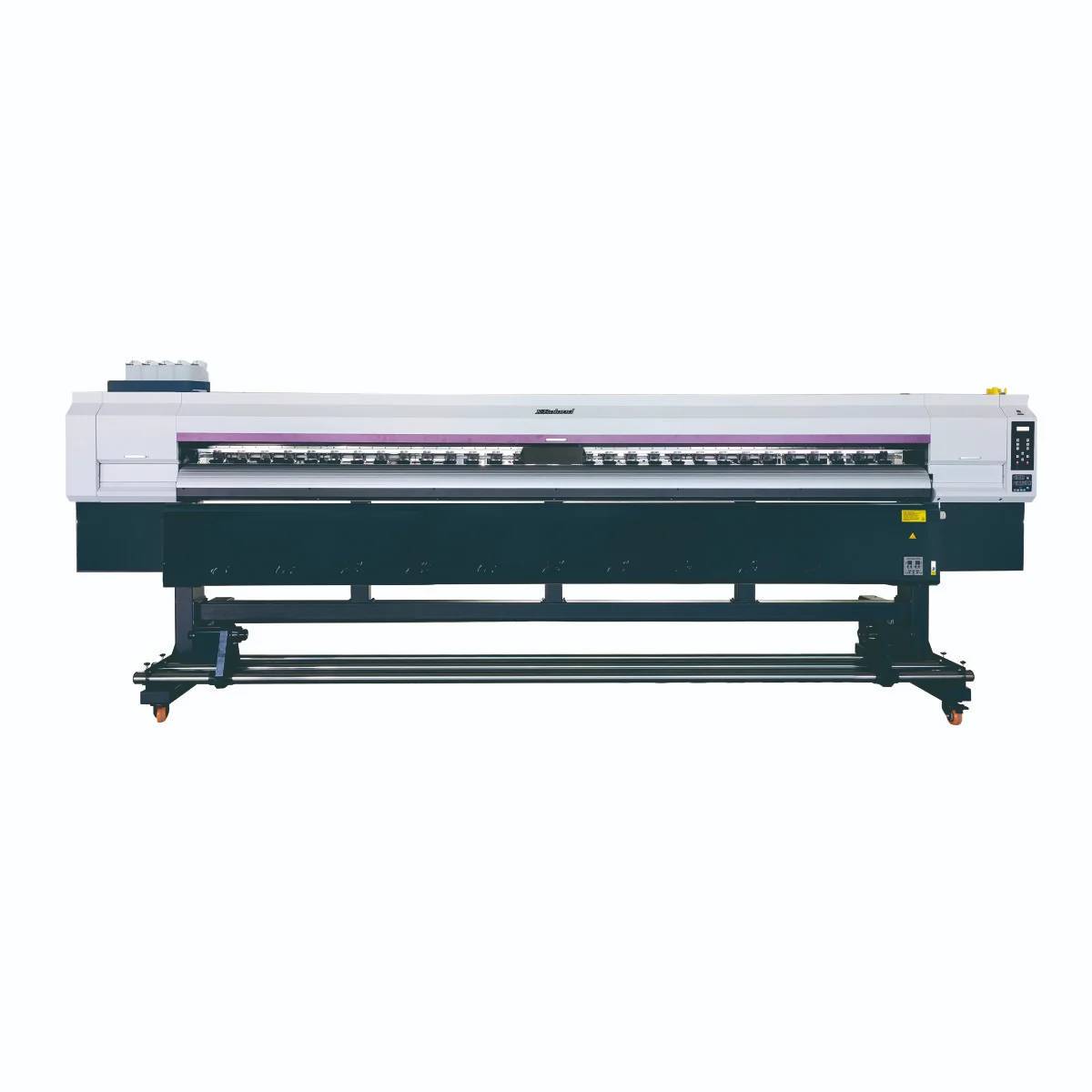
The XL-1680S, 1800S/single head /indoor,outdoor printer is designed to solve a familiar production problem for print shops and signage makers: how to produce large, high-impact graphics on flexible media without moving jobs between multiple machines. As a large-format roll-to-roll printing machine, it suits businesses that need a stable platform for banners, signs, posters, vehicle wrap graphics, shop displays, and other wide printed applications. Its floor-standing structure, enclosed industrial housing, and mobile caster base suggest a machine built for continuous workshop use rather than light office printing.
For buyers comparing wide-format equipment, the main question is usually not just “Can it print?” but “Can it fit into my production flow, handle roll media reliably, and support the kind of jobs my customers order every week?” This model appears intended for that type of work, especially where long media runs, flexible substrates, and repeatable output are important.
Product Positioning and Typical Use
This printer belongs in the digital wide-format category. Based on its visible structure, it is best understood as an industrial roll printer rather than a cutter, laminator, or flatbed system. The wide media path and long horizontal print carriage housing point to roll-to-roll output, which is the standard format for many commercial graphics jobs.
Because the exact print technology is not confirmed from the provided image data, it is safer to describe the unit by function rather than by ink chemistry or hidden hardware claims. What can be stated clearly is that the machine is built for large-area printed graphics on flexible material, where consistency, media handling, and workshop durability matter more than desktop convenience.
Key Features and Visible Capabilities
Wide roll media handling
The printer has a broad bed and front media opening that indicate support for wide roll materials. That makes it suitable for production environments where long graphics need to be printed in one continuous pass, helping reduce seams and post-processing steps.
Industrial enclosed construction
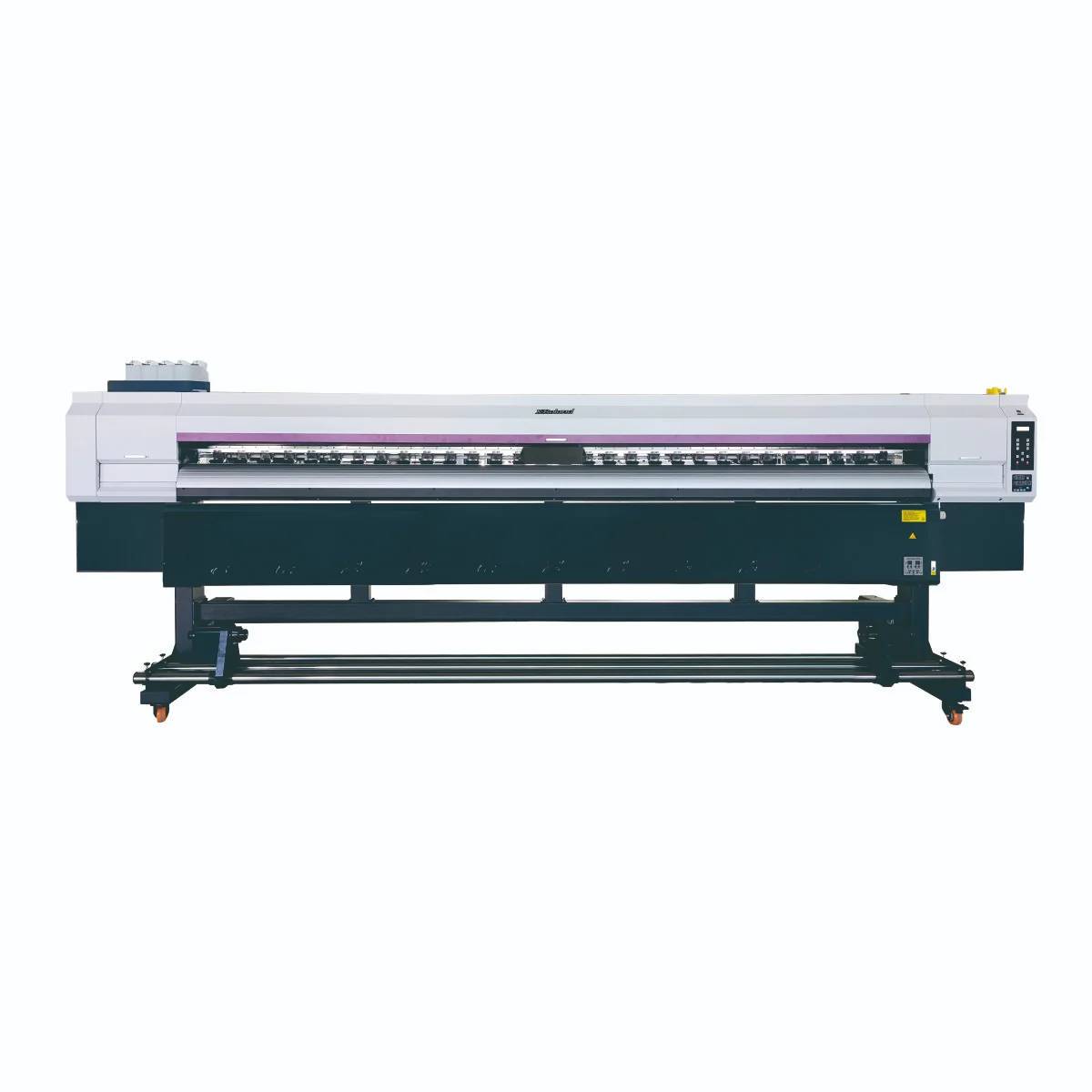
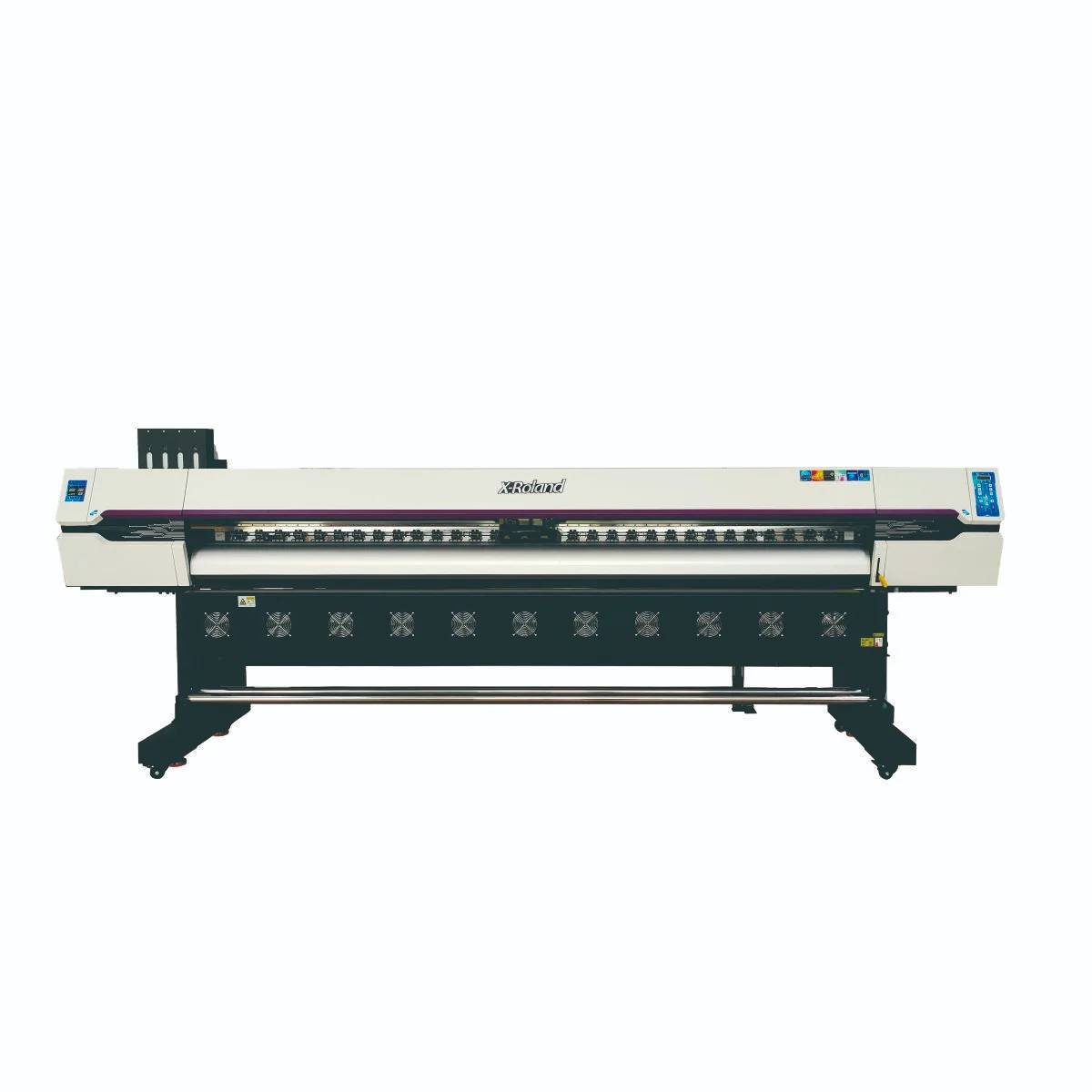
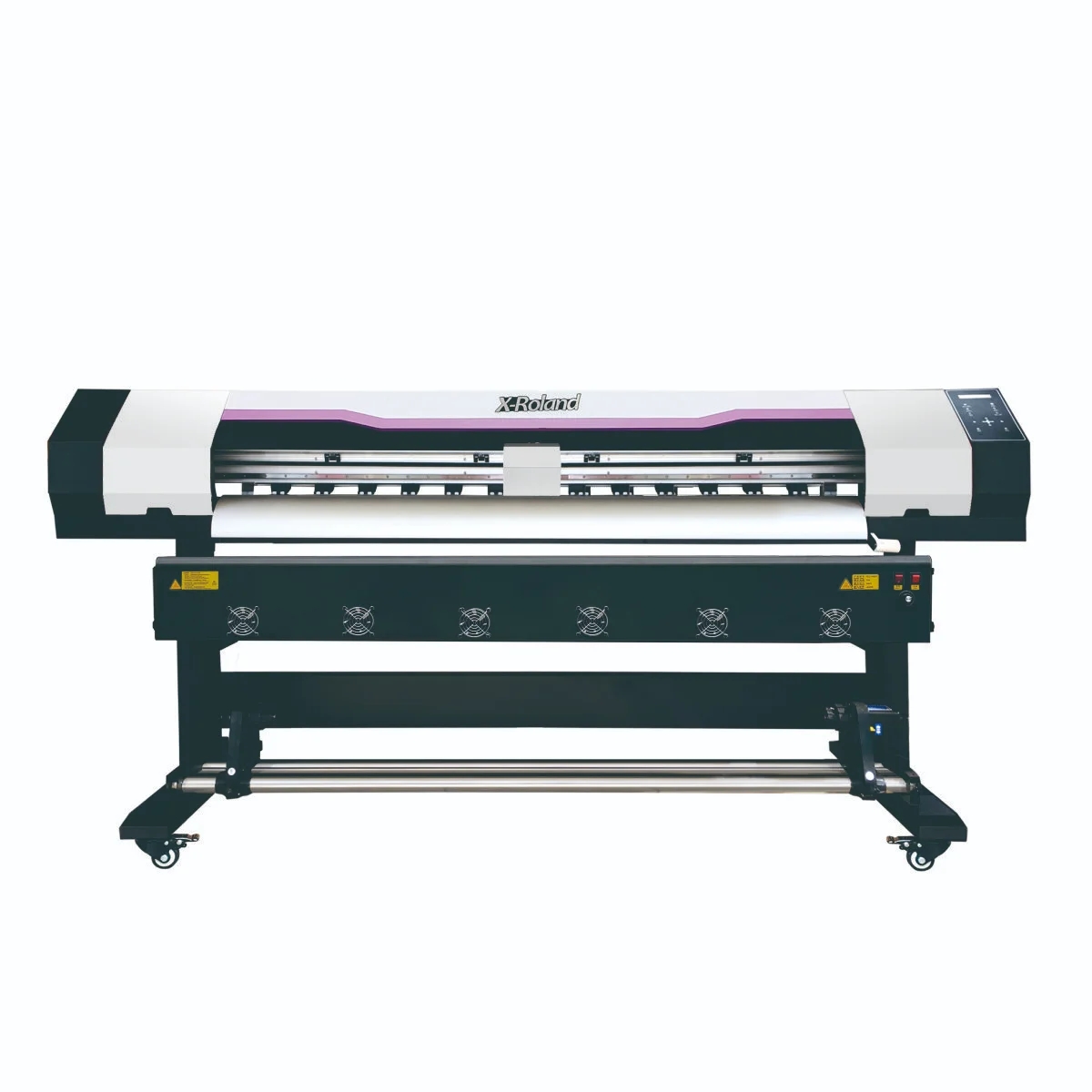
The machine uses mostly metal enclosure panels with a dark heavy-duty base and lighter upper covers. This enclosed style is common in production equipment because it protects internal components, helps maintain a cleaner work area, and presents a more robust mechanical profile than open-frame machines.
Mobile floor-standing base
The caster-mounted stand is a practical feature for workshops that need to reposition equipment for maintenance, layout changes, or machine alignment. Mobility is especially useful in rooms where printers, cutters, and finishing stations must share floor space.
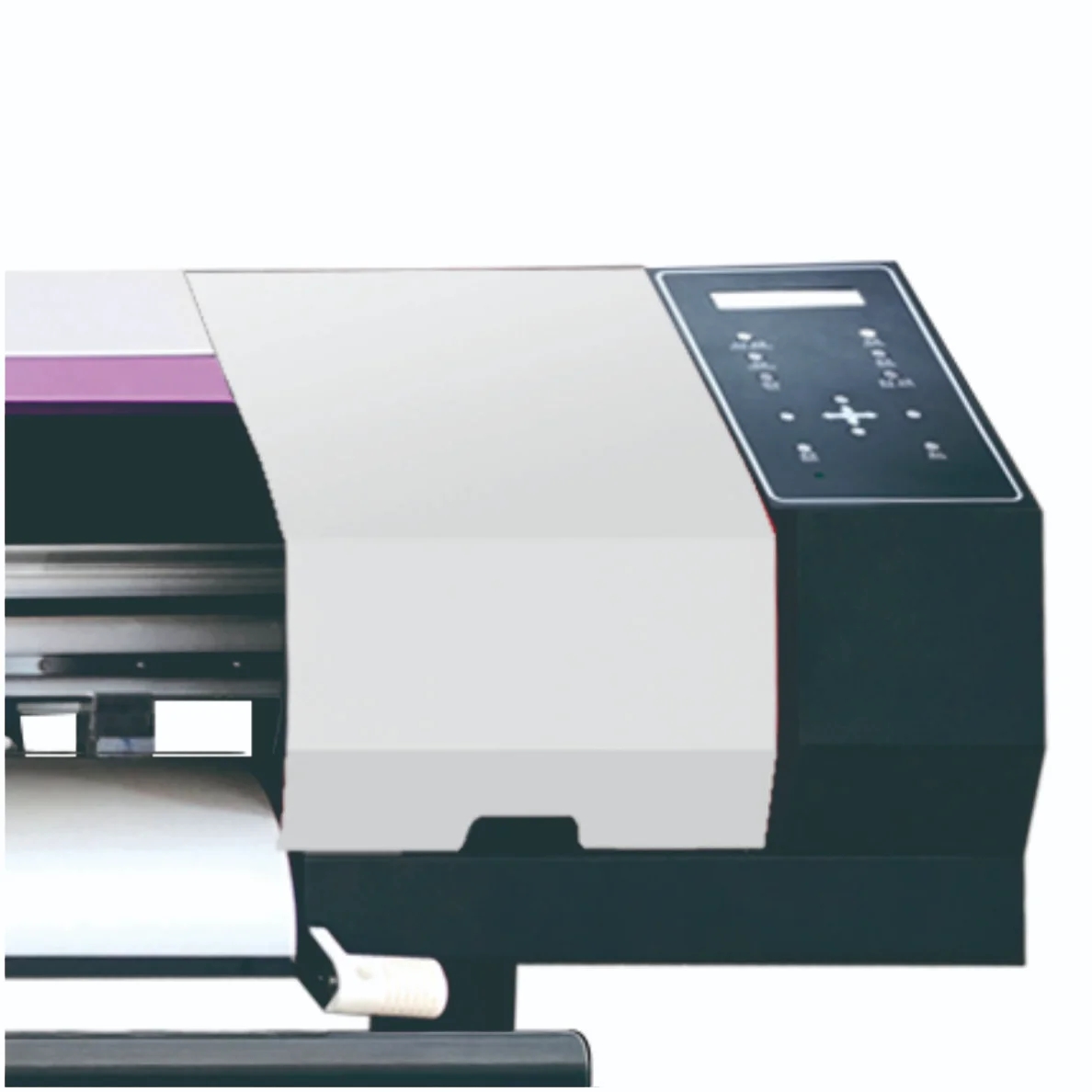
Integrated operator control area
An integrated control panel is visible on the right side of the machine. For operators, that usually means direct access to print controls, setup functions, and job monitoring at the machine itself, which can help reduce interruptions during production.
Specifications and What Buyers Should Confirm
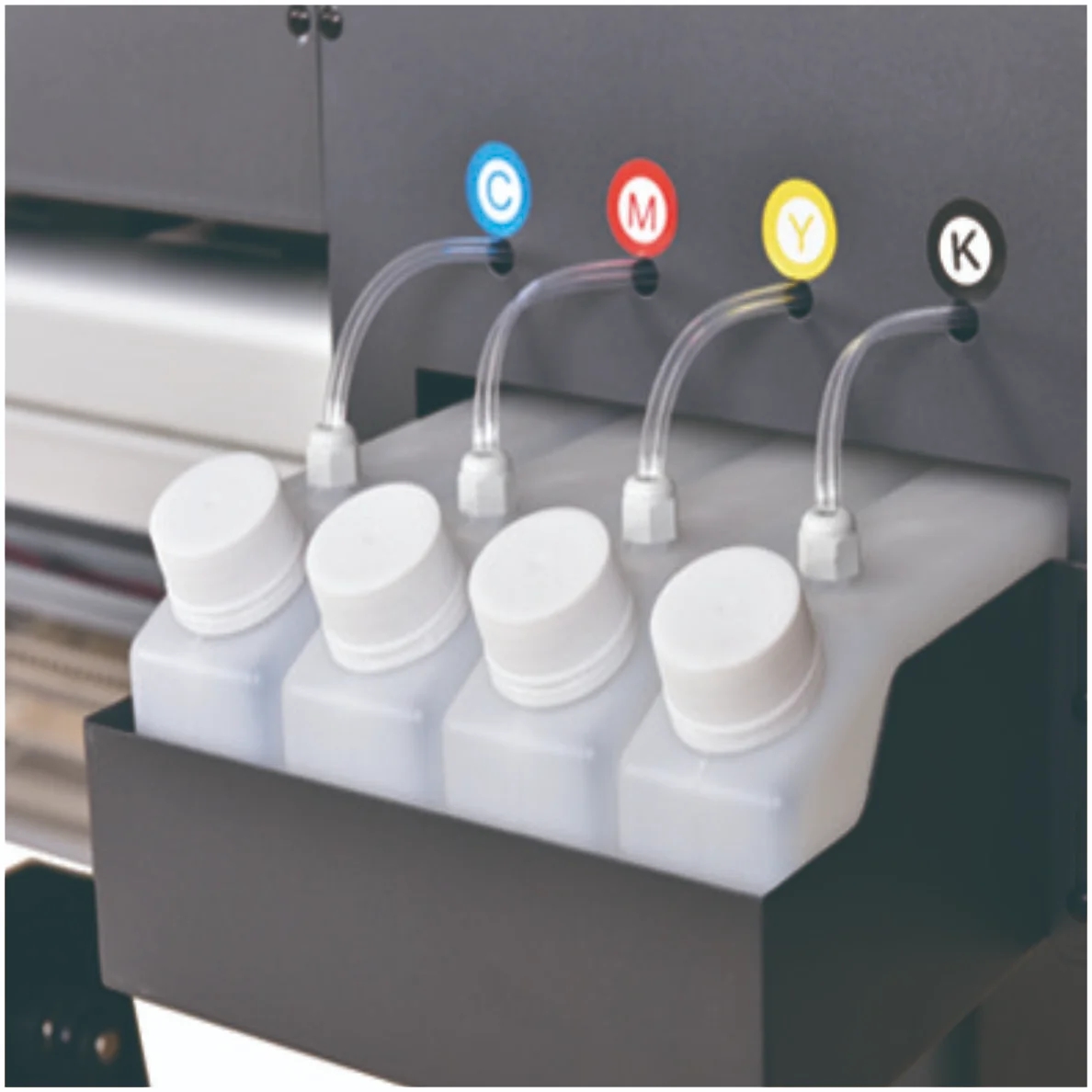
Several technical details are not visible and should be confirmed directly before purchase. Buyers should ask for the exact print width, head configuration, ink system, supported media range, resolution options, speed figures, drying or curing method, power requirements, and operating environment requirements.
Since the product name mentions “single head / indoor,outdoor printer,” buyers should verify what that means in the supplier’s actual configuration. The term may relate to the print-head arrangement, but it should not be assumed to indicate a specific performance level without a datasheet. If your production depends on a precise output profile, request a written specification sheet and a sample print on your target media.
Materials, Media, and Finish Options
This type of wide-format printer is generally used with flexible media such as banner stock, sign vinyl, poster material, and other roll-fed substrates. The exact compatibility depends on the printer’s ink system and drying method, which are not provided here, so media matching should be treated as a purchasing checkpoint rather than an assumption.
The machine itself appears to be finished in industrial painted metal surfaces. That finish is typical for equipment intended for repeated handling, workshop dust, and routine cleaning. The housing design also suggests that service access is built into the enclosure, which can be useful for print-shop maintenance routines.
Manufacturing and Build Considerations
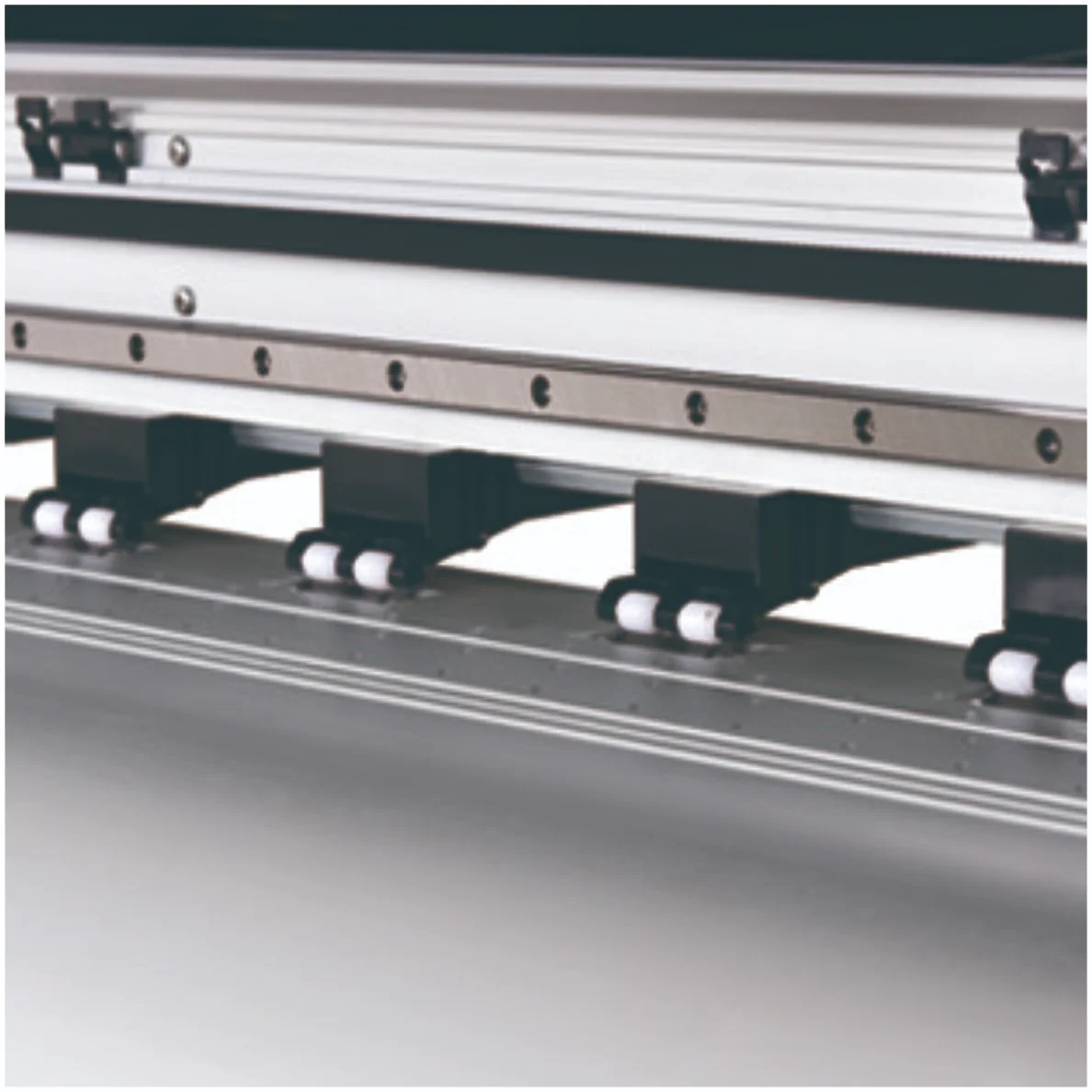
As a production machine, the XL-1680S, 1800S/single head /indoor,outdoor printer appears to follow an industrial assembly approach: enclosed body panels, structural base frame, and broad support geometry for stable roll transport. Those design choices matter because wide-format printing depends on consistent media tracking, controlled feed movement, and a rigid frame that resists vibration.
For buyers, the practical question is whether the machine’s build suits the volume and duty cycle of the shop. A heavier enclosed design is often preferred in commercial settings because it can be easier to integrate into a production line and may handle repeated operation better than lighter machines, though actual reliability still depends on the manufacturer’s components, maintenance schedule, and operator training.
Common Application Scenarios
This printer is well aligned with signage and display production. Typical jobs may include store graphics, trade-show panels, promotional banners, directional signage, and temporary or semi-permanent advertising output. Because it is a roll-to-roll machine, it is also suitable for longer graphics where a continuous print path is needed.
It may also fit businesses producing wall graphics, window graphics, event backdrops, and vehicle wrap components, provided the media and ink system match those applications. Since indoor and outdoor usage are mentioned in the product naming, buyers should still confirm the actual weathering characteristics through supplier documentation before specifying outdoor durability to customers.
Quality Control and Production Reliability
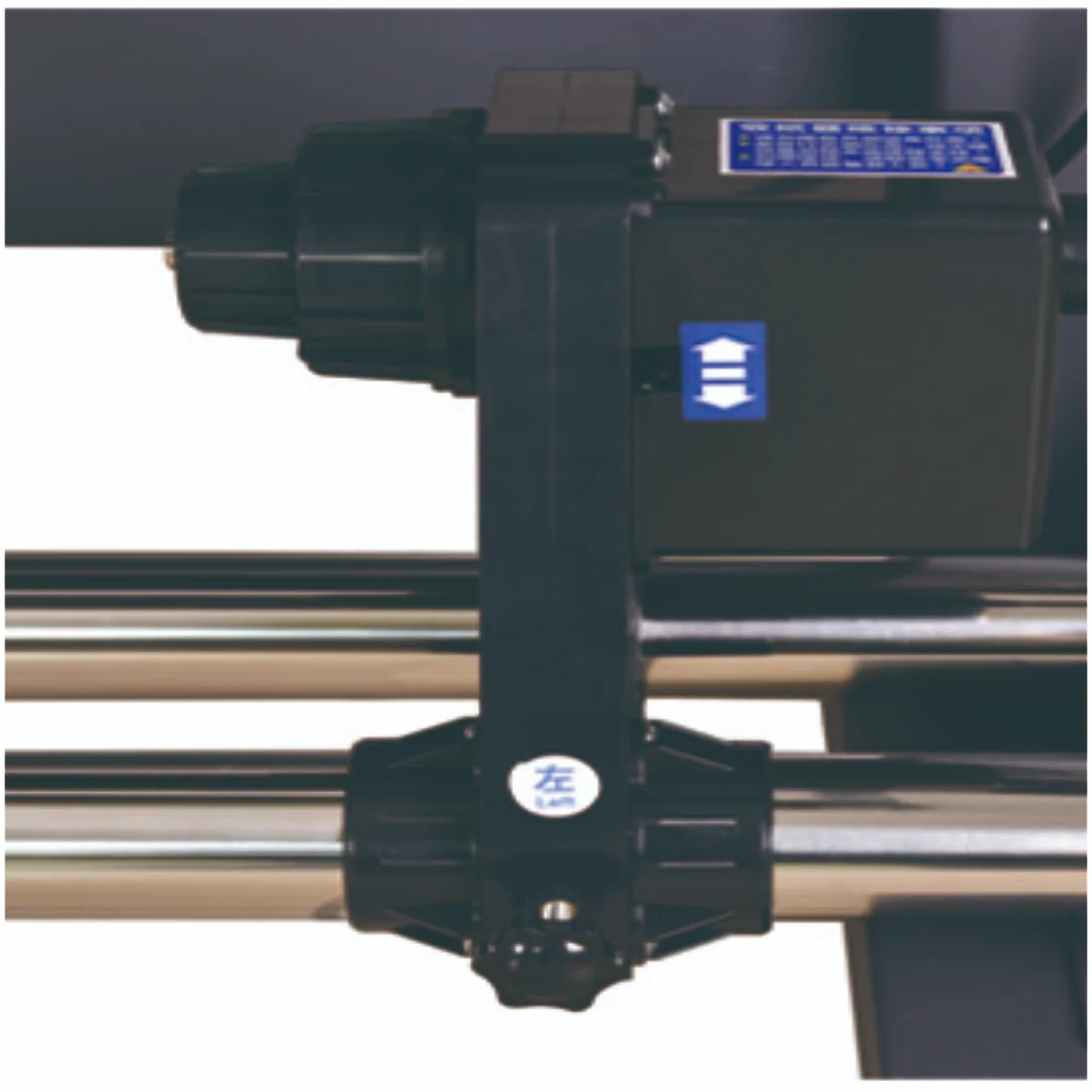
In wide-format printing, quality control is not only about image appearance. It also includes feed accuracy, consistent tension across the roll, stable carriage motion, and repeatability from job to job. A machine like this should be evaluated on how well it handles start-up, long runs, and media alignment across the full printable width.
Before adopting the printer into production, ask the supplier about pre-shipment inspection, calibration steps, and whether setup support is provided. It is also wise to check the availability of replacement parts and service guidance, since industrial printers are often judged by how quickly they can be returned to operation after maintenance.
Customization and Buying Guidance
Because several core technical details are not confirmed, customization and configuration should be discussed early. Buyers should clarify head arrangement, controller options, ink compatibility, take-up system needs, and whether the printer will be used for indoor graphics, outdoor signage, or both. If your shop handles mixed jobs, confirm whether the same platform can support the media types you use most often.
When comparing this model with other large-format printers, focus on production fit rather than headline claims. Ask these questions: What media widths do you really need? How much floor space is available? Who will operate the machine? Is service support local or remote? Can the printer fit your finishing workflow? Those answers often matter more than a single specification line.
Why This Printer May Fit Your Workflow
The main advantages visible from the design are straightforward: it is a wide-format roll printer with a sturdy industrial frame, a mobile base, and an enclosed body suitable for workshop use. For businesses that need to turn flexible media into commercial graphics, that combination can be more valuable than a compact desktop format or a machine built for occasional use.
If your production involves frequent banner, poster, and sign work, a system like this can help consolidate output and keep jobs in-house. That can shorten handoff time, reduce outsourcing, and give your team more control over turnaround.
Requesting the Right Information Before Purchase
To move forward confidently, request the official datasheet, a list of available configurations, media compatibility notes, and a sample output description for your intended application. If possible, ask for photos or a live demonstration of the exact unit, since the visible machine design does not reveal every internal specification.
If you are comparing multiple printers for an indoor or outdoor graphics business, this model is worth evaluating as a production-oriented roll-to-roll platform. Share your target media, daily output needs, and workshop layout with the supplier so they can recommend the most suitable configuration.
Contact for More Details
If you need a wide-format printer for signage, display graphics, and flexible media production, send your application requirements and ask for the full specification package for the XL-1680S, 1800S/single head /indoor,outdoor printer. A proper technical review will help confirm whether it matches your shop’s output, service, and workflow needs.