XL-1601H 13200 Indoor/outdoor printer Overview
The XL-1601H 13200 Indoor/outdoor printer is designed for businesses that need wide roll-fed graphics without stitching panels together. For print shops, sign makers, and display producers, the main problem is often simple: how to produce large visual output that looks consistent, handles repeated handling, and works across both indoor and outdoor use cases. A large-format printer like this addresses that need by supporting continuous media and a long print path for banners, posters, retail graphics, vehicle graphics, and exhibition materials.
Based on the visible machine structure, this is a floor-standing, industrial-style digital printer with a wide body, side operator controls, and a roll-media feed area. The exact print technology is not confirmed from the available information, so it should be treated as a large-format roll-to-roll printer platform rather than a fully specified ink system. That said, the physical layout clearly suggests production use in signage and graphics workflows.
Product overview
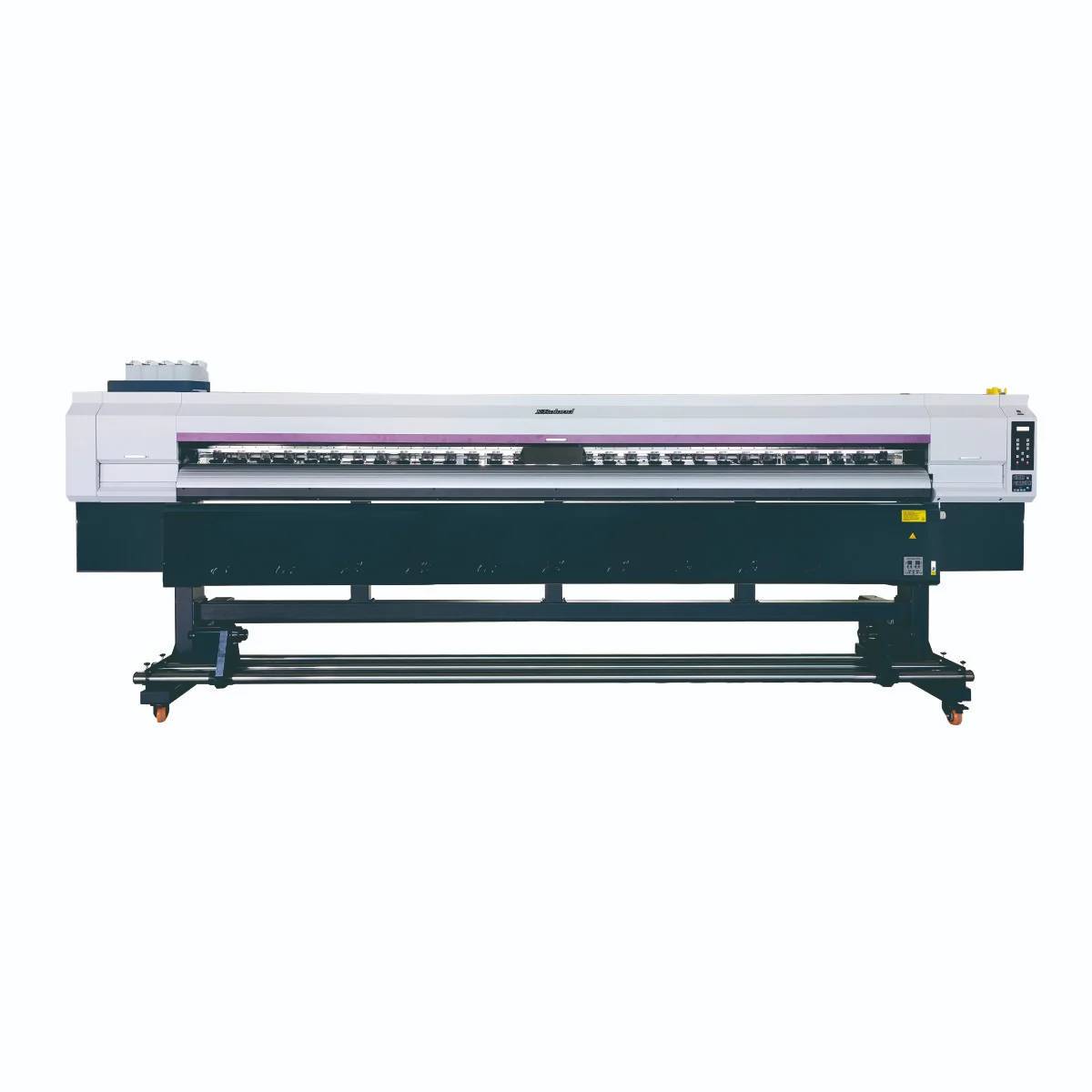
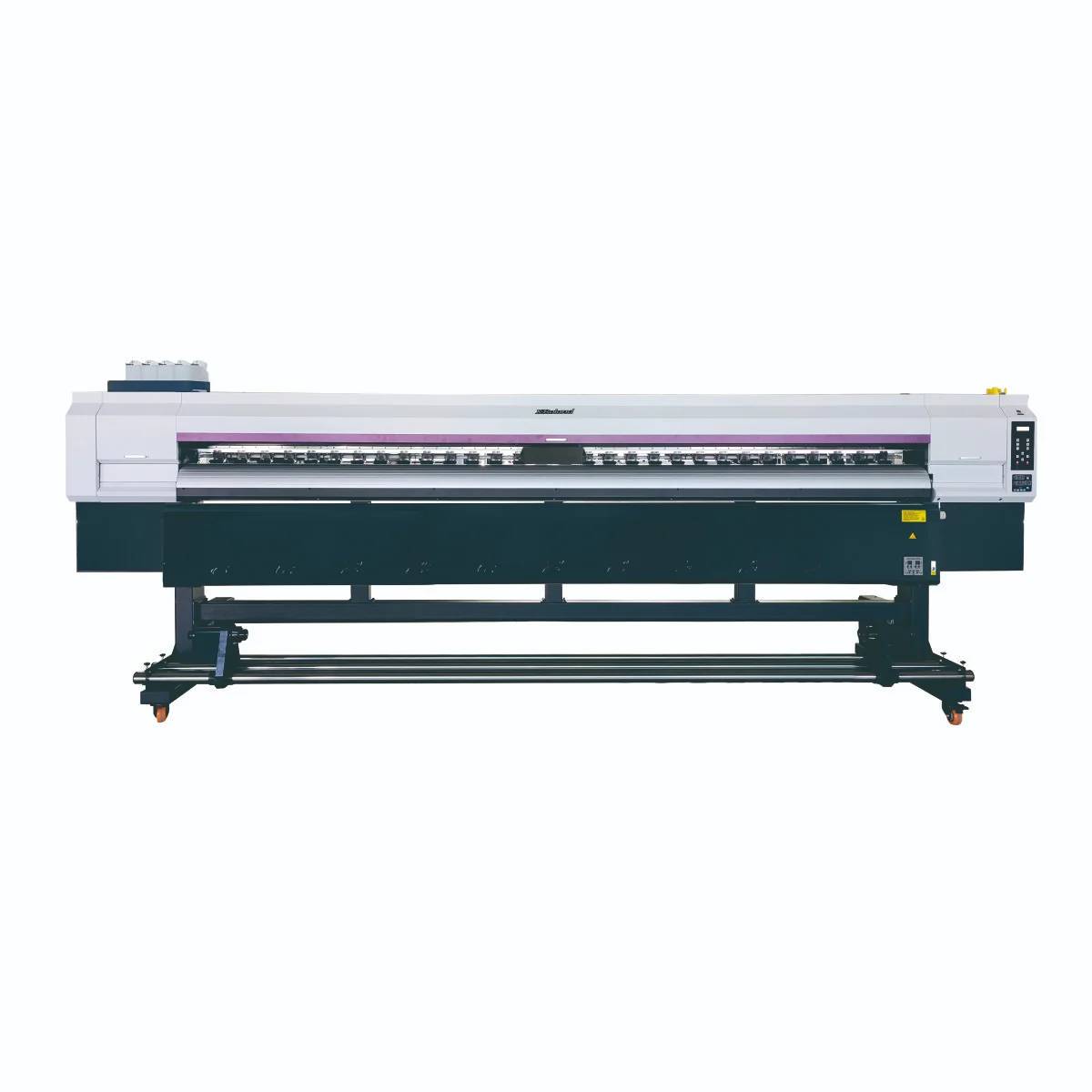
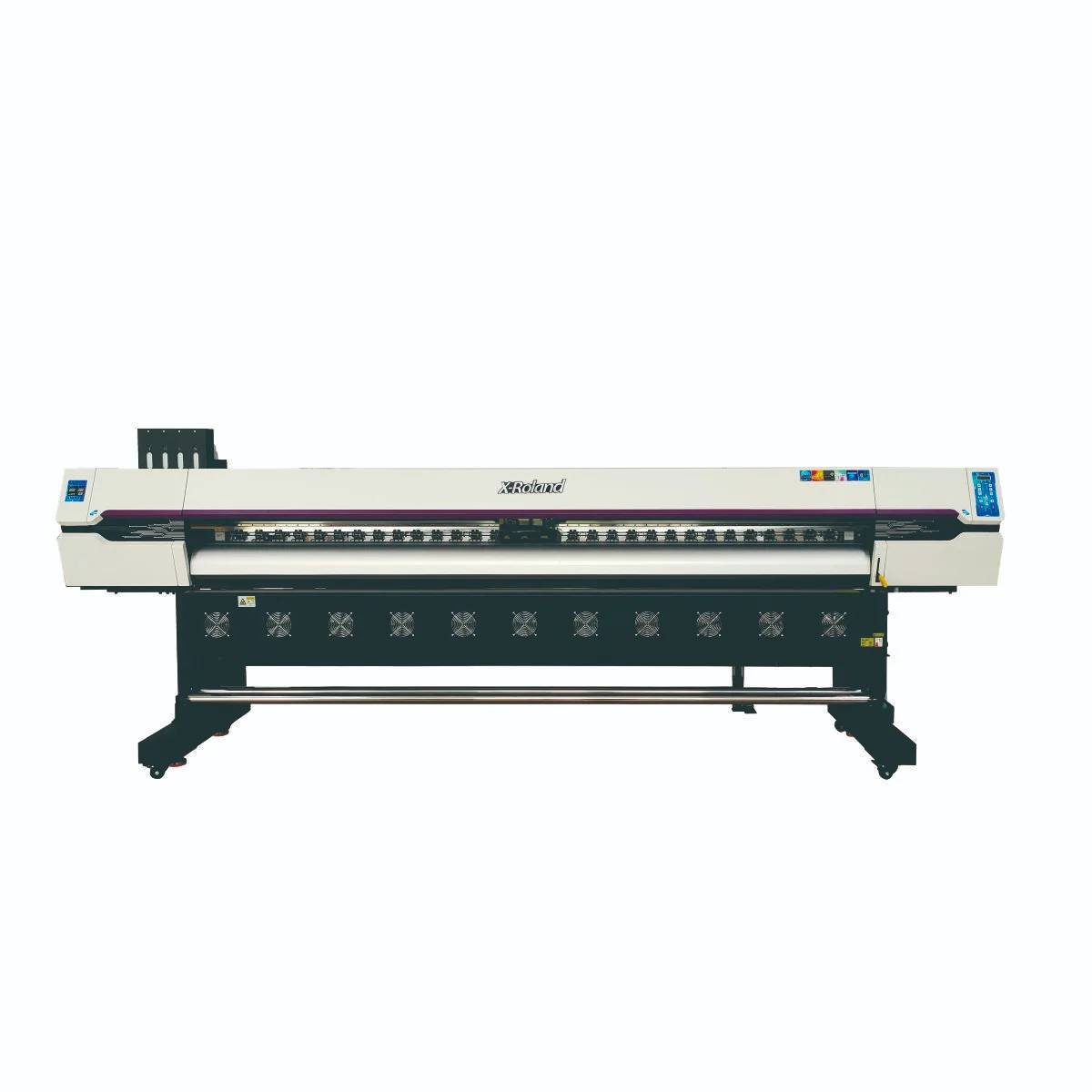
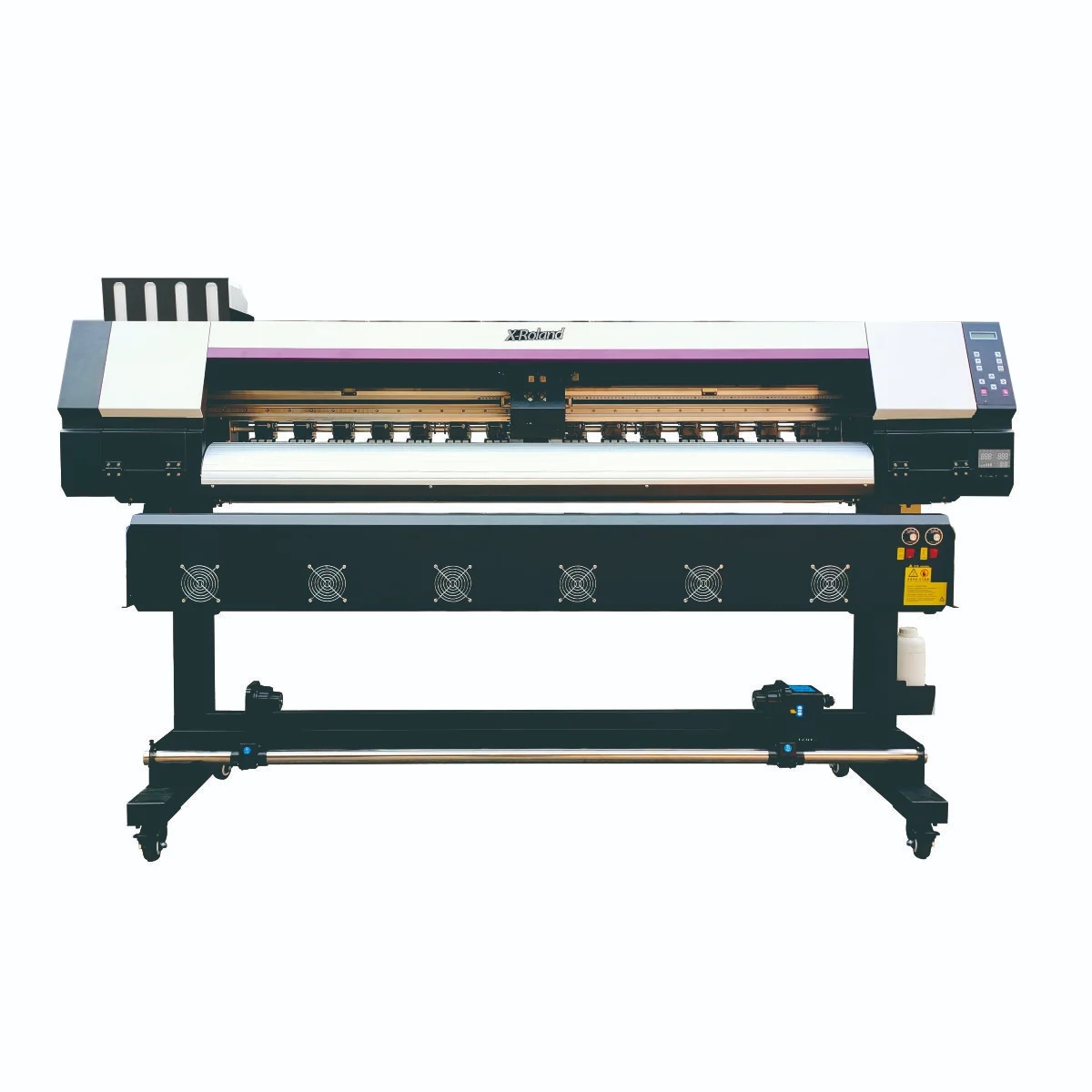
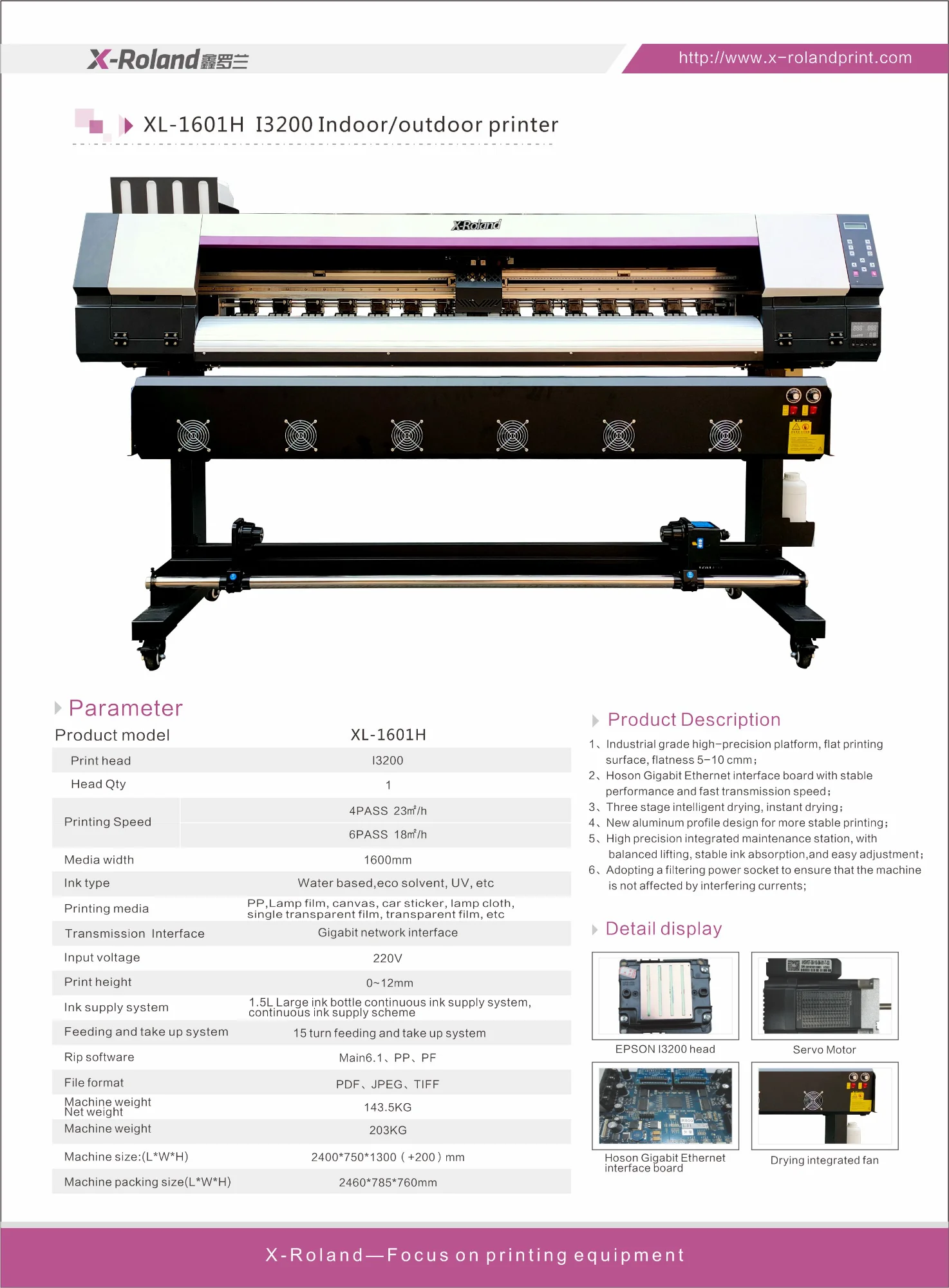
The XL-1601H 13200 Indoor/outdoor printer appears to be built around a long horizontal print carriage enclosed in a rectangular housing. The machine includes a lower support beam, an integrated stand with caster wheels, and visible front cooling fans. These design elements are typical of equipment intended for shop-floor operation, where stability, service access, and movement within the workshop all matter.
The printer’s wide-format layout makes it suitable for producing graphics on roll stock. That matters because many buyers need a machine that can handle long runs of banner material or signage film while keeping alignment and media tracking under control. A roll-fed system also helps reduce manual handling compared with sheet-by-sheet output, especially when producing repeated jobs or longer graphics.
Key specifications and visible capabilities
Wide-format roll-to-roll structure
The machine is clearly designed for continuous media fed from a roll. This is a practical advantage for production environments that regularly output banners, posters, decals, and other long-format graphics. The front media path and wide print bay indicate a layout intended for large printable widths, although the exact print width is not provided.
Floor-standing industrial frame
The integrated base and caster wheels suggest a heavy-duty machine that can be repositioned within a shop while still providing the rigidity needed for printing. For buyers, this is useful when workshop space must be reconfigured for maintenance, loading, or workflow changes.
Operator access and control
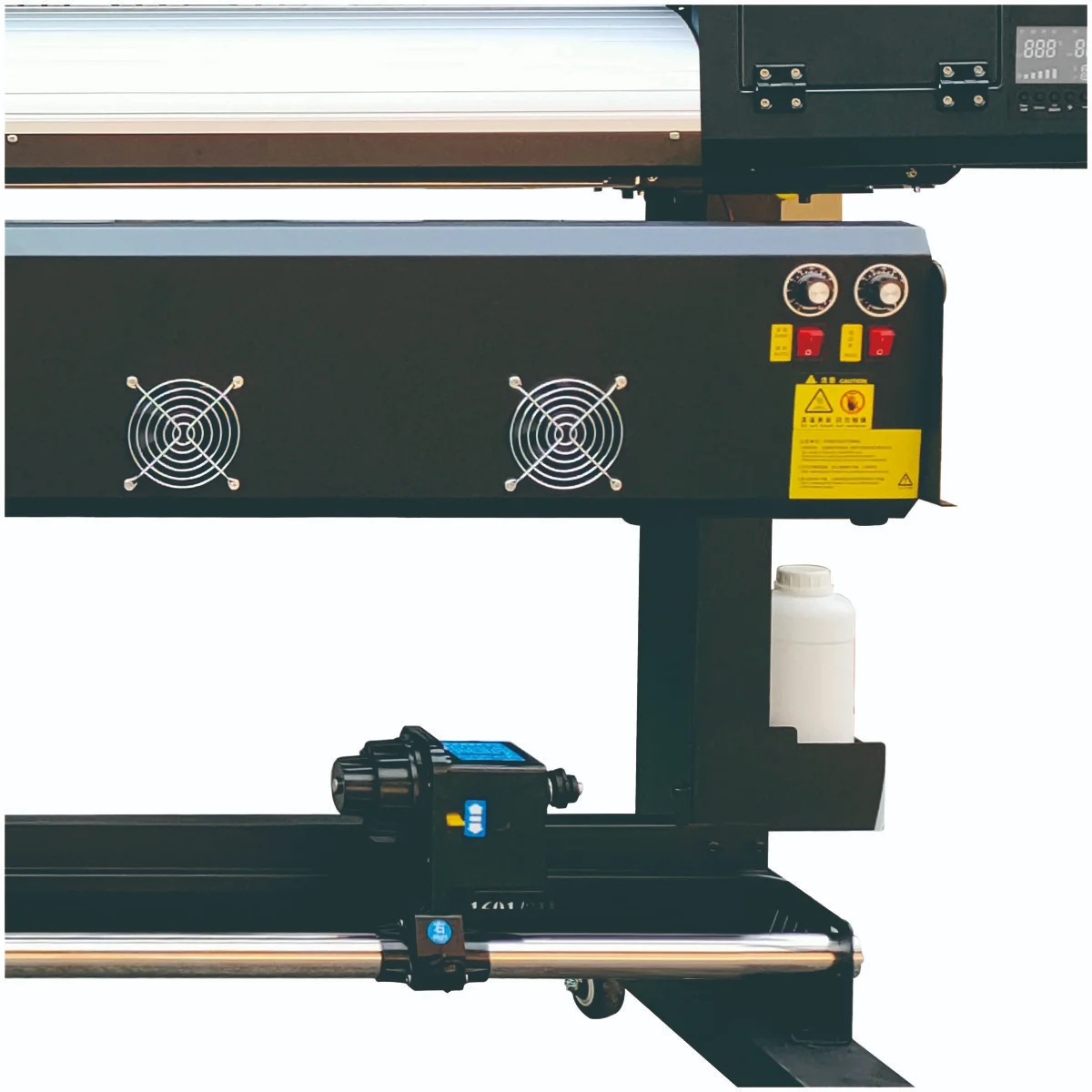
A side-mounted control panel is visible on the right side. In production use, this kind of operator interface is important for start-up, job handling, and routine machine checks. It also keeps controls within reach without forcing the operator to work from the front media path.
Ventilation and thermal management
Multiple cooling fans are visible on the lower front section. While the exact internal system is not confirmed, the presence of active ventilation is a practical sign that the printer is built for sustained operation and internal heat management. For high-volume work, airflow can help support stable machine operation and protect internal components.
Materials and finish
The visible construction shows a painted metal body and frame with a dark industrial finish and lighter protective covers in selected areas. That type of enclosure is common in commercial printing equipment because it balances durability with access for servicing. The exposed mechanical area inside the print bay also indicates that maintenance and cleaning access were part of the design.
For buyers comparing machines, the enclosure material matters because it affects rigidity, serviceability, and long-term shop use. A solid metal frame is generally preferred in printing environments where vibration control, repeated loading, and consistent media tracking are important.
Manufacturing and operating process
While the exact print engine is not confirmed, the overall configuration points to a standard industrial roll-to-roll production workflow. In general, machines in this class work by feeding media from a roll, moving the print carriage across the printable surface, and advancing the material in controlled increments. Pinch rollers and feed rollers are likely part of the media handling system, although the take-up unit is not clearly visible in the provided information.
For a buyer, the key value of this process is repeatability. Once media is loaded and calibrated, the machine is intended to keep images aligned as the job progresses. That is especially important for large banners, long signs, or graphics where banding, skew, or tension issues can show up quickly over extended output.
Typical application scenarios
The XL-1601H 13200 Indoor/outdoor printer is relevant to shops producing graphics for both interior and exterior environments. Common use cases include banners, vehicle graphics, posters, retail signage, exhibition displays, and other roll-fed printed materials. These are the kinds of jobs where speed, width, and dependable media handling often matter more than one-off decorative detail.
For sign makers, the ability to produce large-format work in-house can shorten turnaround time and reduce outsourcing. For print service providers, a machine like this can support recurring jobs from retail clients, event organizers, property managers, and advertisers who need consistent graphic output over time.
Quality control considerations
Because the exact ink system and print specifications are not provided, quality expectations should be evaluated based on the machine’s operating stability and the shop’s own production standards. Buyers should look at media tracking, carriage movement consistency, ease of cleaning, and the accessibility of rollers and service areas. Those factors often have more practical impact on day-to-day output than brochure language.
When comparing large-format printers, it is also important to verify how the machine handles long jobs, whether the print path remains stable across extended runs, and how the operator monitors alignment. In production settings, a reliable control layout and visible service access can help reduce downtime and improve repeatability.
Customization and integration guidance
Since the exact print technology is not confirmed, any customization discussion should start with the buyer’s actual workflow. A print shop should confirm media sizes, job length, target graphic types, and whether the machine will be used mainly for indoor signage, outdoor signage, or mixed applications. From there, the right configuration can be matched to the production environment.
Buyers should also consider whether they need a matching feed or take-up arrangement, what kind of workspace clearance is available around the machine, and how the printer will integrate with prepress and finishing equipment. A floor-standing printer with caster wheels can simplify installation, but the final layout still needs enough room for loading, inspection, and material handling.
What buyers should evaluate before choosing this printer
Several decision factors matter when reviewing the XL-1601H 13200 Indoor/outdoor printer. First is the required output width and the types of media the shop uses most often. Second is production volume, since continuous roll-fed work places different demands on the machine than occasional short runs. Third is the level of operator involvement, including how frequently media must be checked or adjusted during printing.
It is also worth considering the service environment. A machine with visible cooling fans, accessible controls, and a robust frame may be easier to maintain in a busy shop. If the buyer plans to produce mixed indoor and outdoor graphics, they should confirm ink and media compatibility directly with the supplier before purchase, since those details are not confirmed here.
Why the machine layout matters in daily production
In large-format printing, layout is not just a visual detail; it affects throughput. A wide, elongated housing gives the carriage space to travel across large media without crowding the work area. A stable base helps keep movement controlled. Side controls make operation more practical. Even the cooling strategy has a role in keeping production predictable during longer shifts.
That is why buyers often evaluate industrial printers by structure as much as by stated specs. When the machine is built for real shop use, the workflow tends to be easier to manage: load roll media, set alignment, monitor the job, and move the output into finishing. The XL-1601H 13200 Indoor/outdoor printer appears to follow that practical design logic.
Request the right configuration for your workflow
If you are comparing wide-format equipment for signage or graphics production, start by defining your media sizes, job mix, and output requirements. Then ask for the exact print technology, ink type, supported materials, and available accessories for the XL-1601H 13200 Indoor/outdoor printer. Those details will determine whether it is the right fit for your shop.
For a precise recommendation, share your target applications and production volume with the supplier and request full technical confirmation before purchase. That is the most reliable way to match the machine to your business needs.