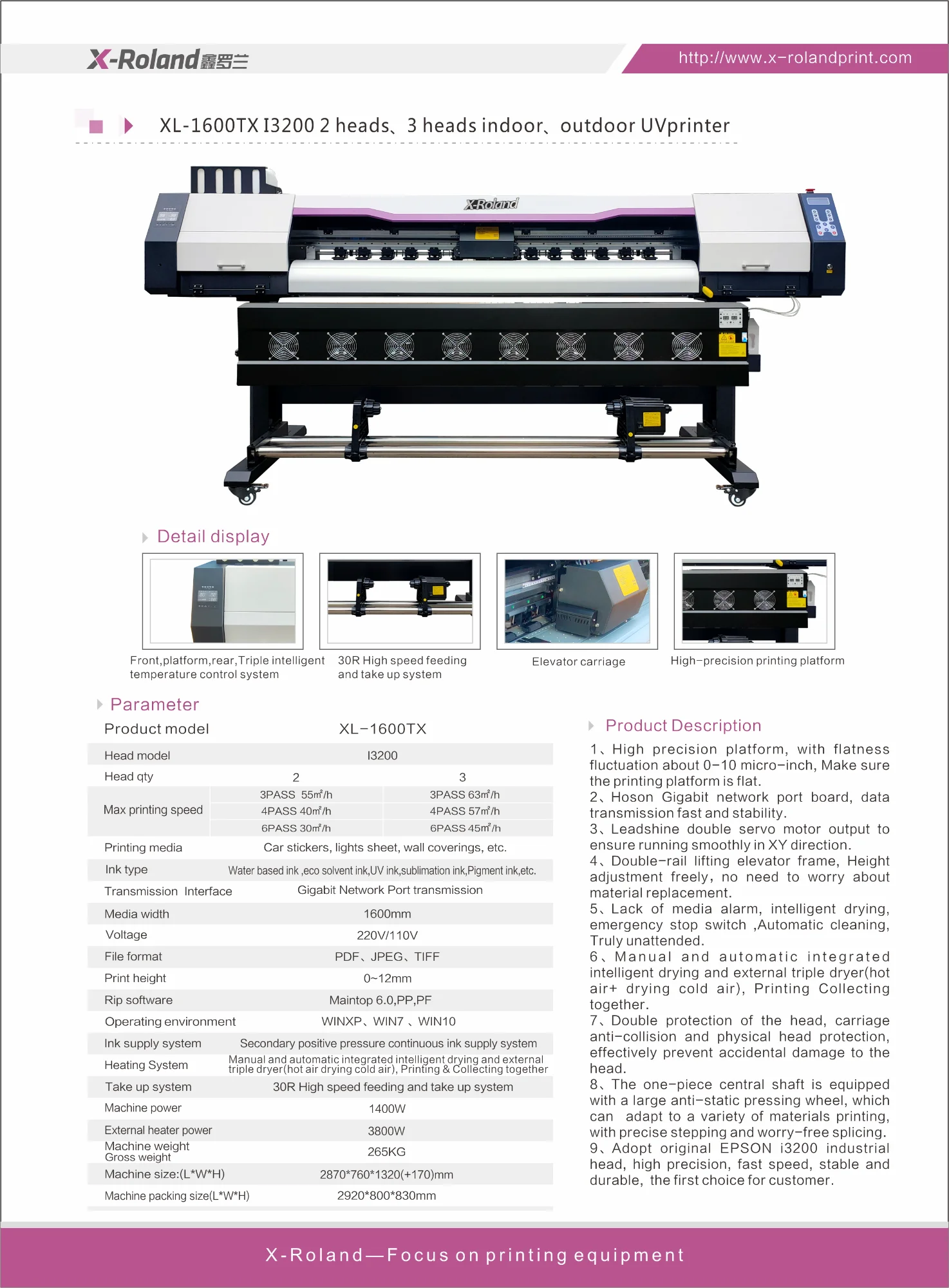
XL-1600TX I3200 2 heads, 3 heads indoor, outdoor UVprinter Overview
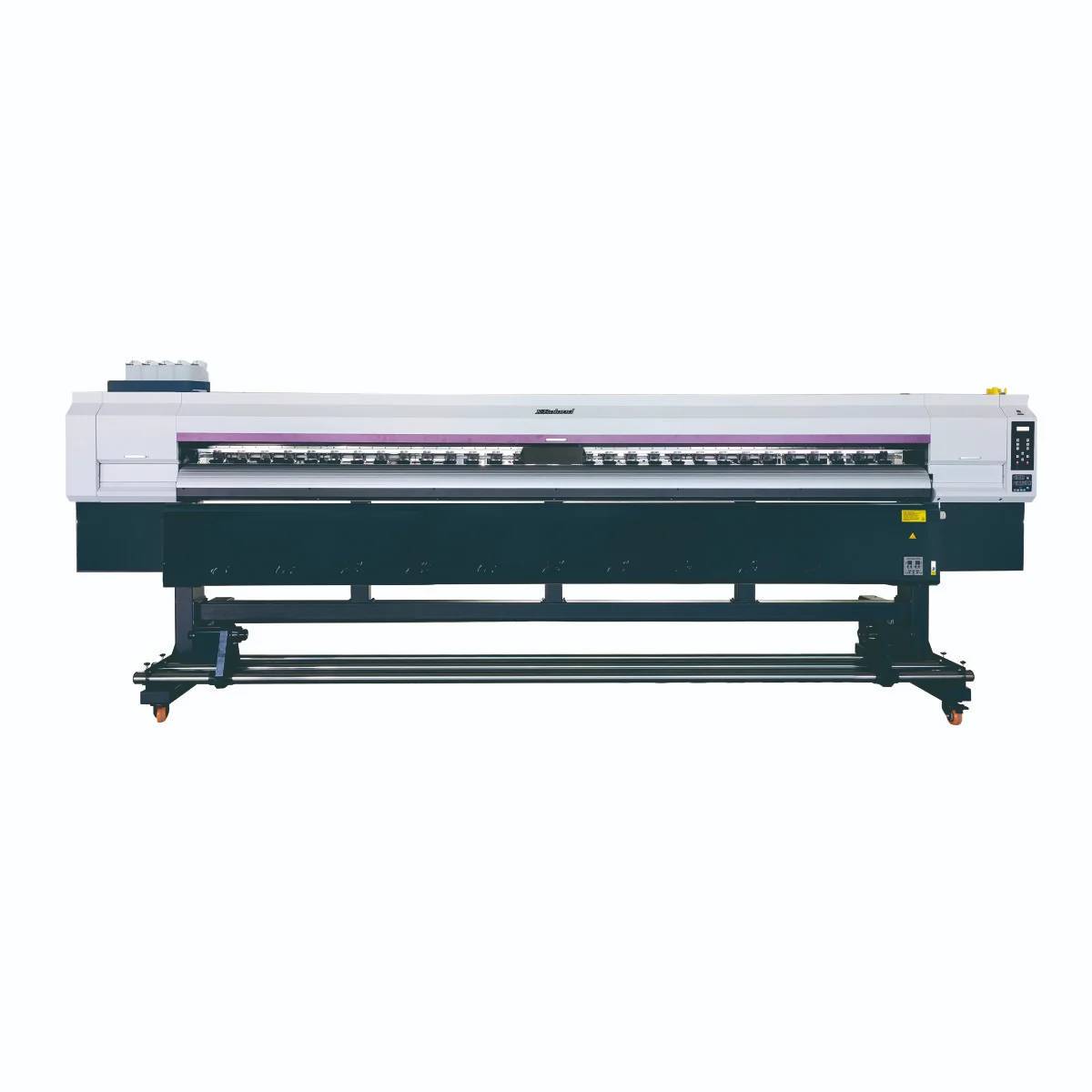
The XL-1600TX I3200 2 heads, 3 heads indoor, outdoor UVprinter is designed for businesses that need a large-format printing platform for banners, signage, vehicle graphics, posters, and other roll-fed output. For print shops and graphics producers, the main problem is often simple: too much demand for oversized printing and too little floor space, throughput, or stability from smaller machines. A floor-standing industrial printer like this helps address that gap by combining a long print body, a guided media path, onboard controls, and a wheeled base for easier installation and positioning.
From the visible structure, this machine is built as a wide-format inkjet printer with a central print zone, enclosed housings, and a lower stand. The layout suggests a production-focused device intended for long media runs rather than short desktop jobs. While the exact ink technology is not confirmed by the image alone, the machine is clearly arranged for industrial roll-to-roll workflows where consistent media handling and stable carriage movement matter.
Product structure and visible capabilities
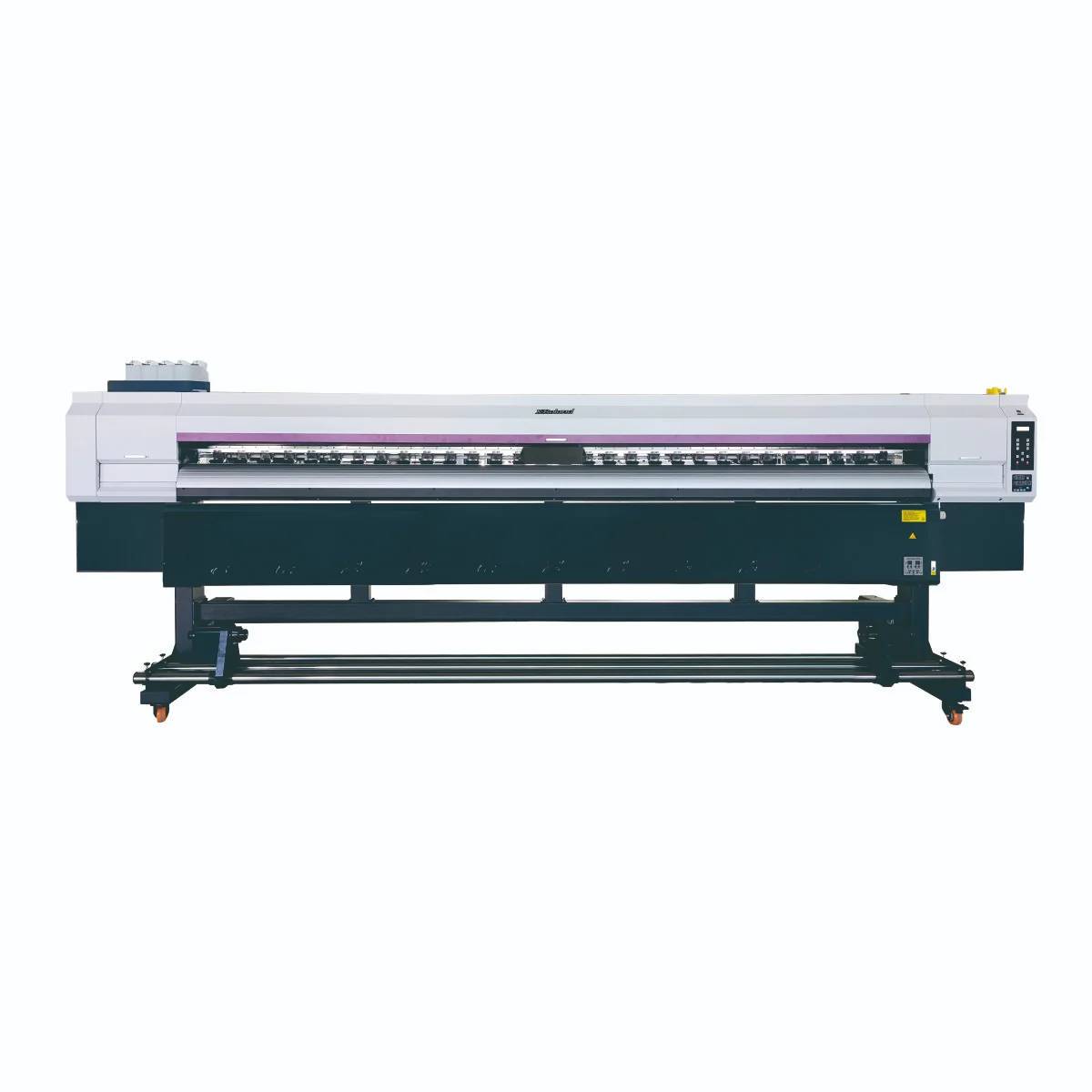
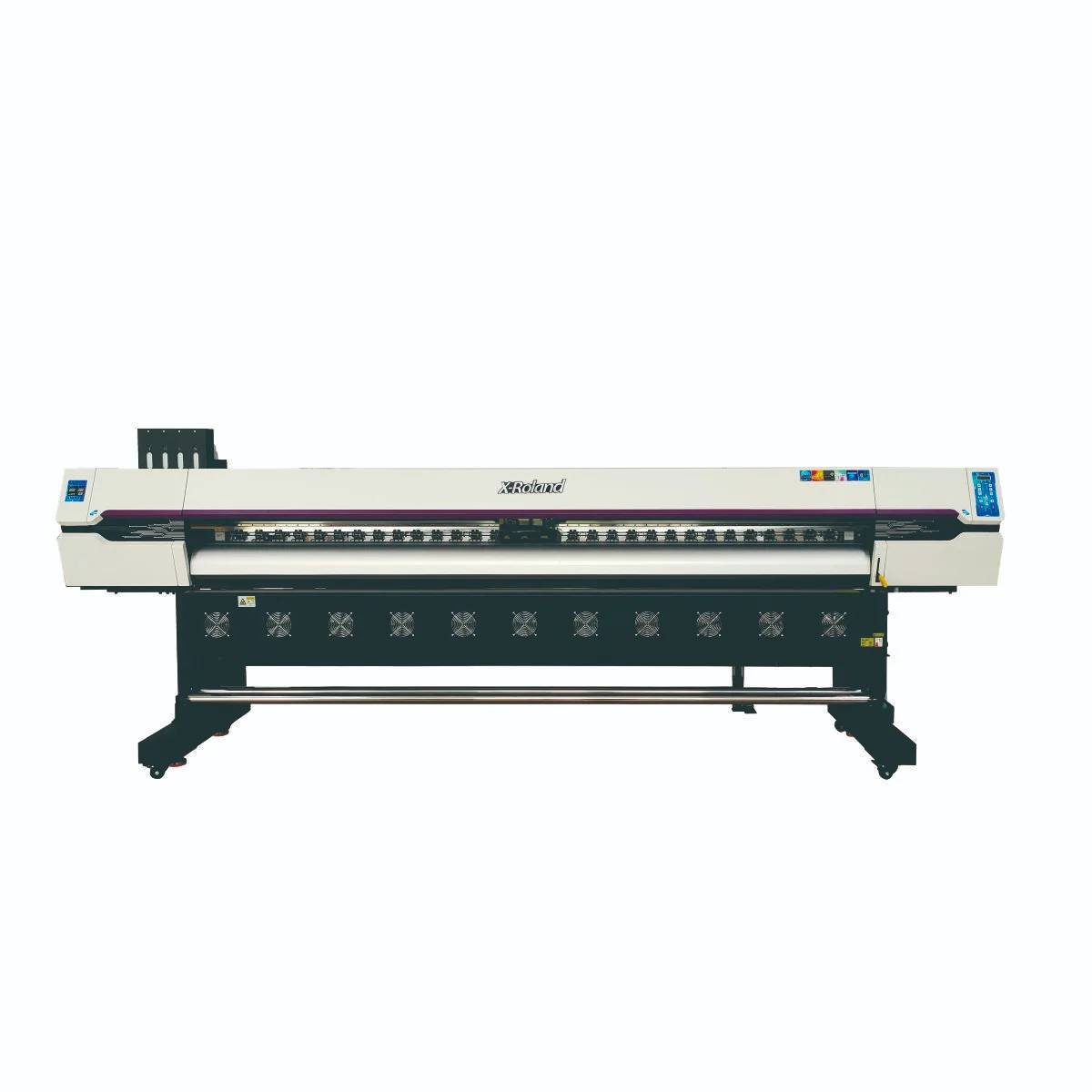
The machine presents a rectangular floor-standing format with a long horizontal body. That layout is typical for production printers because it supports extended media travel and provides room for the print carriage rail, feed area, and output handling system.
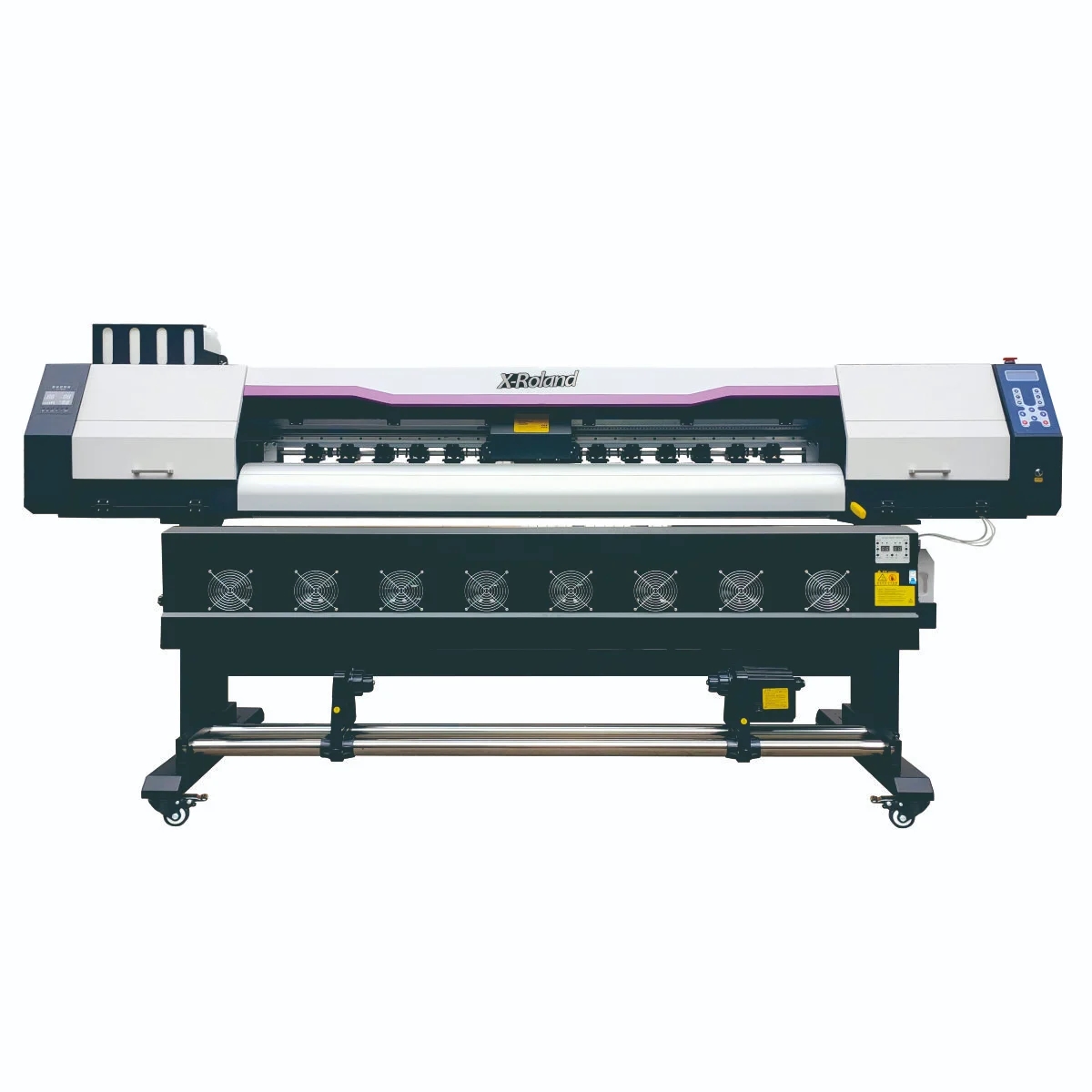
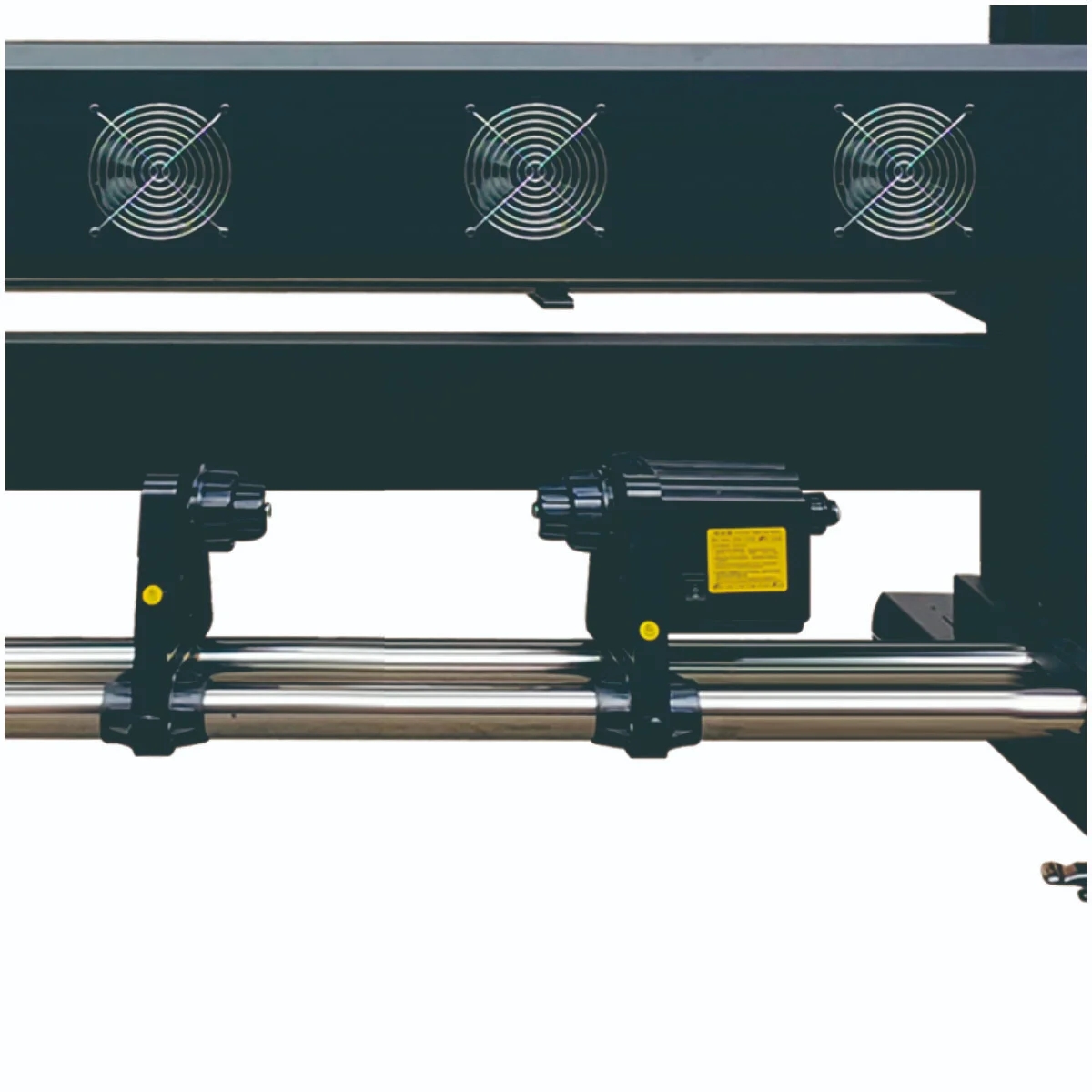
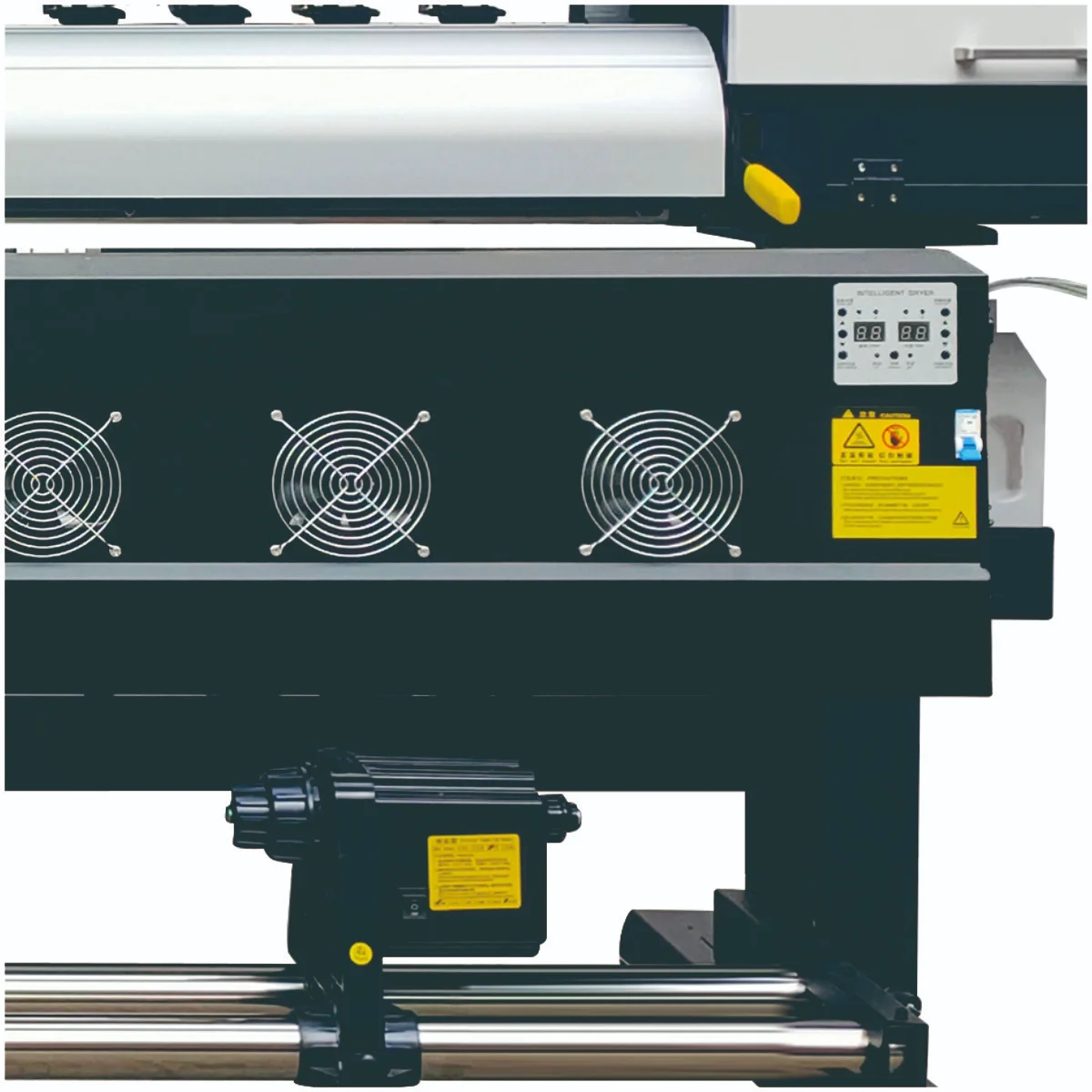
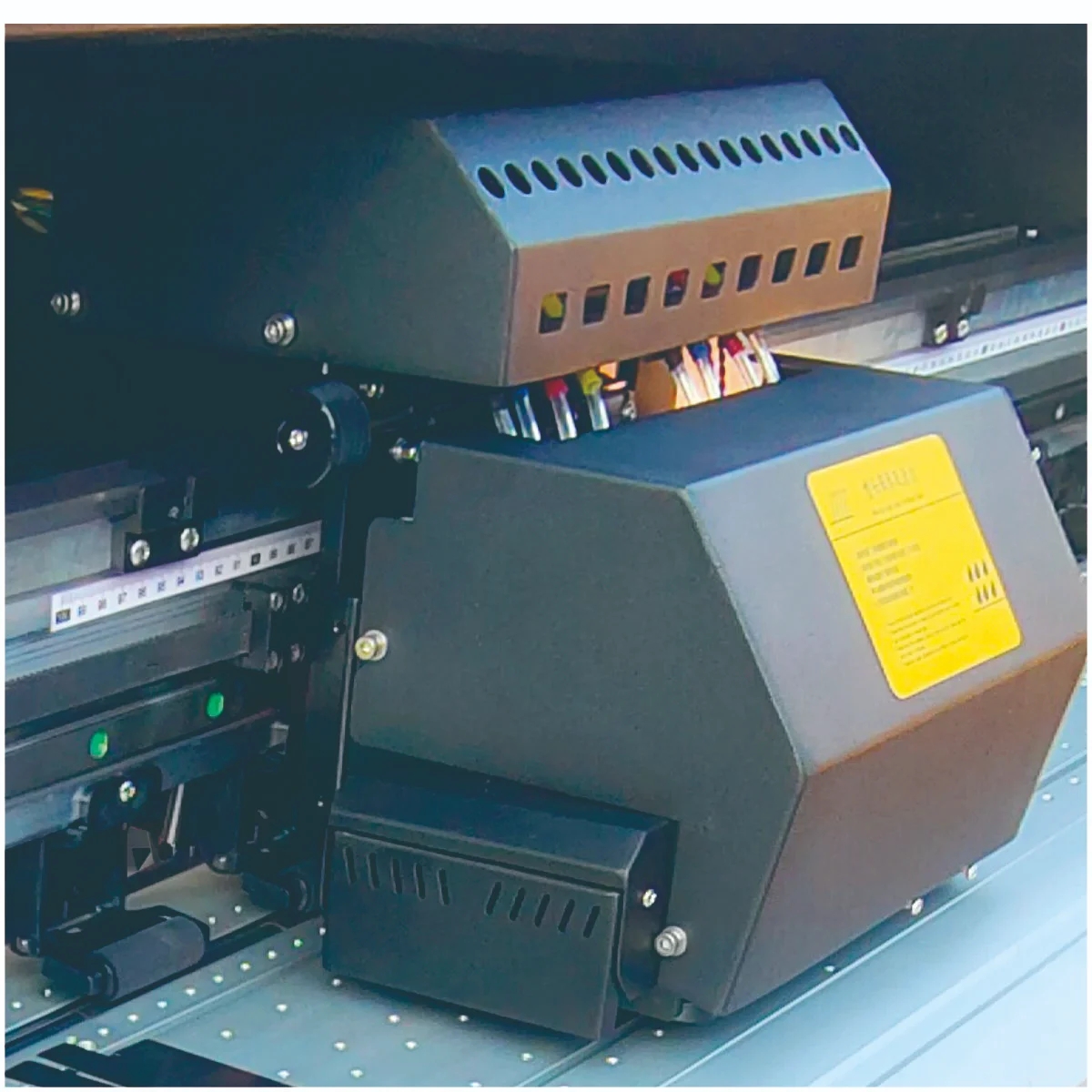
Several visible components are worth noting. The front area shows a media feed and platen section where roll material would travel through the print zone. A front take-up or guide roller is also visible, which is useful in managing printed media as it exits the machine. The internal carriage and printhead rail area appear enclosed within the top section, helping protect moving components while maintaining access for service. On the lower section, multiple cooling fans are mounted, indicating attention to thermal management during long print runs.
The right side includes an onboard control panel, which is a practical feature for operators who need quick access to machine status, movement commands, and job handling without relying entirely on a separate workstation. The wheeled base makes the unit easier to move for installation, cleaning, or shop-floor repositioning.
Key specifications and practical capabilities
Based on the provided information, the machine is best understood as an industrial large-format printer intended for continuous production work. Exact values such as print speed, resolution, maximum width, and power requirements are not supplied, so they should be confirmed directly with the supplier before purchase.
Visible and inferred production advantages
Large-format output capability for roll-fed media
Floor-standing construction for shop use
Multiple cooling fans for heat management during operation
Integrated control panel for local operation and setup
Wheeled base for easier movement and positioning
Enclosed side access covers that support maintenance and protection
These features matter because production printing is not only about image quality; it is also about uptime, media stability, and the ability to handle repeated jobs without excessive operator intervention. For sign shops and commercial graphics teams, a stable mechanical platform can reduce handling issues that often lead to wasted material or inconsistent output.
Materials and finish options
The exterior of the machine appears to combine metal and plastic enclosure surfaces, finished mainly in white with dark teal or black sections and purple accent trim. This type of industrial finish is common in production equipment because it balances durability, service access, and a clean shop appearance.
As for print materials, the exact compatible substrates are not confirmed here. However, the machine is visibly configured for roll-fed workflows, so buyers typically evaluate whether their own media mix includes banner stock, sign vinyl, backlit material, coated poster stock, or other flexible substrates. Final compatibility should be checked against the vendor’s official media list, ink set, and drying or curing method.
Manufacturing process and machine design logic
Industrial printers like this are generally built around a rigid frame, a guided carriage rail, media feed rollers, and a controlled take-up path. That structure helps maintain print alignment over long runs. In production environments, the frame stiffness and the quality of media transport often affect real-world consistency as much as the print engine itself.
The visible cooling fans suggest that the internal layout is designed to dissipate heat from electronics and moving assemblies. This is important in a long-format printer because extended duty cycles can raise internal temperatures and affect component life. The side covers likely provide access for routine maintenance, cleaning, and service checks, which are important considerations in a busy print shop.
The mention of 2 heads or 3 heads in the model name indicates possible configuration options, but exact head setup and supported technology are not verified by the image alone. Buyers should confirm the actual head arrangement, ink system, and service architecture before specifying the machine for a workflow.
Application scenarios
This type of printer is typically suited to commercial print shops, sign makers, graphics production facilities, and other businesses that need long-format output. It can fit into operations producing indoor and outdoor graphics, though the exact outdoor performance depends on the confirmed ink and media system.
Typical use cases
Banners for retail promotions, events, and exhibitions
Signage for stores, facilities, and directional displays
Vehicle graphics and wrap-related production workflows
Posters, display graphics, and point-of-sale visuals
Roll-fed jobs requiring repeated runs and consistent alignment
For buyers serving mixed demand, a machine like this is often chosen when the shop needs a broader production range than office-style printers can provide. The floor-standing footprint and industrial build make it more appropriate for dedicated print rooms than occasional-use environments.
Quality control and production reliability
In a large-format printer, quality control begins with mechanical consistency. Operators usually look at media tracking, carriage movement, roller alignment, and thermal stability before evaluating color output. The visible structure of this machine suggests a focus on those basics: guided transport, enclosed sections, and active cooling.
For buyers, it is wise to ask for details on maintenance routines, printhead cleaning procedures, calibration support, and spare part availability. Since the exact print technology is not confirmed here, quality expectations should be tied to documented supplier specifications rather than assumptions. Any buying decision should also include clarification on service access, operator training, and recommended environmental conditions for the printer room.
Customization guidance for buyers
Because only limited verified information is available from the product image and summary, customization should be discussed carefully with the supplier. The most important points to confirm are head configuration, ink technology, media compatibility, and the intended use environment.
Questions to clarify before ordering
Is the unit configured for 2 heads or 3 heads as supplied?
What ink system is used, and is it suitable for indoor, outdoor, or mixed applications?
What media widths and roll sizes are supported?
What maintenance access is available on the side and front panels?
Are there options for different drying, curing, or feeding configurations?
What control interface and software workflow are supported?
These questions help prevent mismatches between expectation and actual shop use. A buyer producing mostly signage may need different media handling than a shop focused on posters or vehicle graphics.
Buyer decision factors
When comparing this printer with other large-format systems, buyers should consider more than headline size. The most useful factors are workflow fit, serviceability, and how often the machine will run throughout the day.
Look closely at floor space requirements, operator access, media loading convenience, and whether the wheeled base suits your installation plan. Check if the cooling system is adequate for your duty cycle. Confirm how the front control panel is used in daily operation. Since the exact technical specifications are not provided here, request the official data sheet before final approval.
If your shop is growing from smaller format equipment, this type of industrial printer may help reduce outsourcing and keep more jobs in-house. If you already run a production line, the decision may come down to throughput balance, maintenance simplicity, and compatibility with your existing media and finishing process.
Why this format suits production shops
The main advantage of a machine in this class is not only its size, but the way its structure supports repeatable output. A long print body, guided feed area, and accessible control layout are practical details that matter every day on a production floor. The XL-1600TX I3200 2 heads, 3 heads indoor, outdoor UVprinter is positioned for buyers who need a serious roll-to-roll platform rather than a compact office printer.
Its visible design suggests it was built to be installed, operated, and maintained in a commercial setting. That makes it relevant for print businesses that value dependable media handling, organized machine access, and a footprint that can live in a dedicated production space.
Request details and plan your configuration
If you are evaluating the XL-1600TX I3200 2 heads, 3 heads indoor, outdoor UVprinter for your shop, the best next step is to confirm the exact configuration, ink system, supported media, and service requirements with the supplier. Share your intended application, expected monthly output, and material mix so the machine setup can be matched to your workflow.
For a proper purchase decision, ask for the full specification sheet, installation requirements, and operating guidance. That will help you determine whether this printer is the right fit for indoor graphics, outdoor signage, or a broader production line.